

What's Happening?
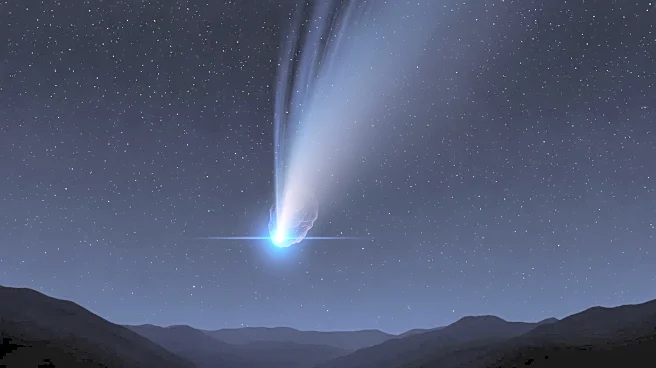
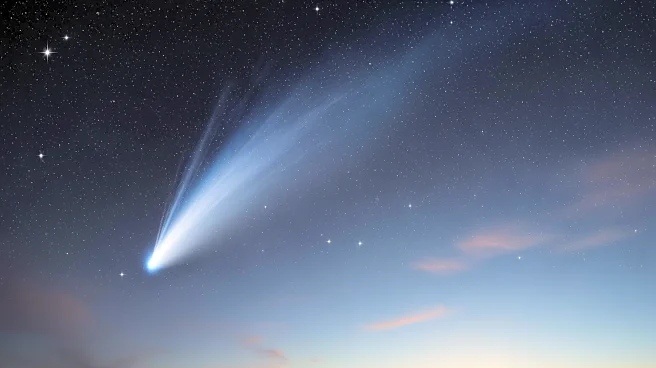
On January 17, 1910, the Great January Comet, also known as the Daylight Comet, reached its closest approach to the Sun, becoming visible in broad daylight and outshining Venus. Initially discovered in the Southern Hemisphere, the comet was mistaken for
Halley's Comet, whose return was highly anticipated later that year. The unexpected appearance of the Great Comet captivated observers and added to the excitement surrounding celestial events in 1910.
Why It's Important?
The Great Comet of 1910 serves as a reminder of the unpredictability and wonder of astronomical phenomena. Such events capture public imagination and contribute to scientific understanding of comets and their behavior. The comet's unexpected appearance highlights the importance of continuous observation and study of the skies, which can lead to new discoveries and insights. Additionally, the event underscores the historical significance of comets in human culture and their impact on scientific and public interest in astronomy.