








What's Happening?
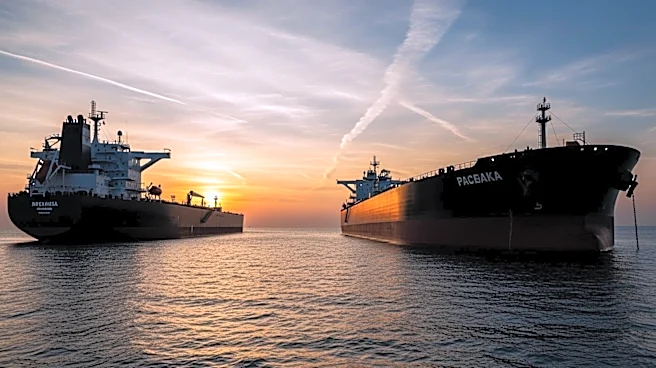
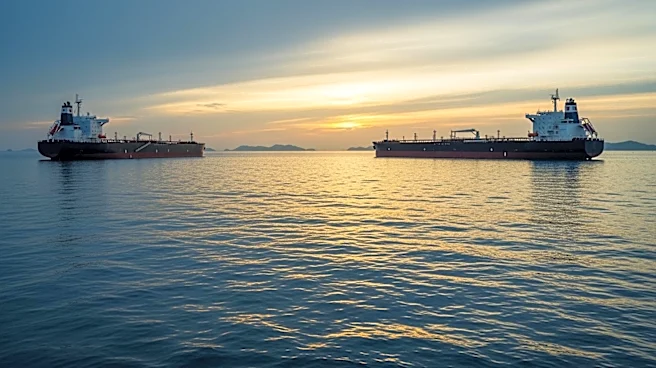
Malaysia's maritime agency has reported that Iranian-linked tankers are exploiting jurisdictional gaps to conduct ship-to-ship transfers of sanctioned oil near its waters. This activity is occurring in the Eastern Outer Port Limits (EOPL) area, a key
hub for such transfers involving Iran's 'shadow fleet'—aging tankers that often operate with disabled tracking systems and false identities. The U.S.-based advocacy group United Against Nuclear Iran (UANI) has identified 42 such transfers since February 28, following the onset of conflict in the Middle East. Malaysian authorities have denied allegations of ignoring these activities, stating that the transfers occur outside their territorial waters and in remote areas beyond radar coverage.
Why It's Important?
The ongoing ship-to-ship transfers of Iranian oil near Malaysia highlight significant challenges in enforcing international sanctions. These activities allow Iran to continue exporting oil despite U.S. sanctions, primarily to China, which purchases about 90% of Iranian oil. The situation underscores the complexities of maritime law enforcement and the difficulties in monitoring vast oceanic areas. It also raises environmental concerns, as unsanctioned transfers increase the risk of oil spills. The persistence of these operations despite a U.S. blockade of Iranian ports suggests that current enforcement measures may be insufficient, potentially undermining international efforts to curb Iran's oil exports.
What's Next?
Malaysia has indicated plans to strengthen monitoring and enhance cooperation with relevant agencies to safeguard its maritime domain. However, the effectiveness of these measures remains to be seen, given the jurisdictional challenges and the sophisticated methods employed by the shadow fleet. The situation may prompt further diplomatic discussions between Malaysia, the U.S., and other stakeholders to address the enforcement gaps. Additionally, Indonesia is reviewing the legality of these activities near its maritime zones, which could lead to increased regional cooperation in monitoring and enforcement.
Beyond the Headlines
The use of Malaysian waters for Iranian oil transfers highlights broader geopolitical tensions and the strategic importance of maritime routes in global trade. It also reflects the ongoing struggle between nations to balance economic interests with international obligations. The situation may lead to increased scrutiny of maritime activities in the region and could influence future policy decisions regarding international shipping and trade regulations.