






What's Happening?
Utah State University (USU) has named Gina Gilson as the Interim Director of the Center for Colorado River Studies, effective August 1. Gilson, an assistant professor in the Department of Environment and Society, brings extensive experience in water-related
research and expertise to her new role. She previously managed Utah Valley University’s Capitol Reef Field Station, where she focused on water rights, management, and policy. Gilson holds a Bachelor of Science in Environmental Science and Biology from Creighton University and a Master of Science and Ph.D. in Geography and the Environment from Oxford University. The Center for Colorado River Studies will also undergo a reorganization, falling under the Janet Quinney Lawson Institute for Land, Water, and Air. This strategic move aims to better connect USU's research on the Colorado River basin with policymakers and decision-makers. The former director, Jack Schmidt, will continue his involvement with the center as a senior research scientist.
Why It's Important?
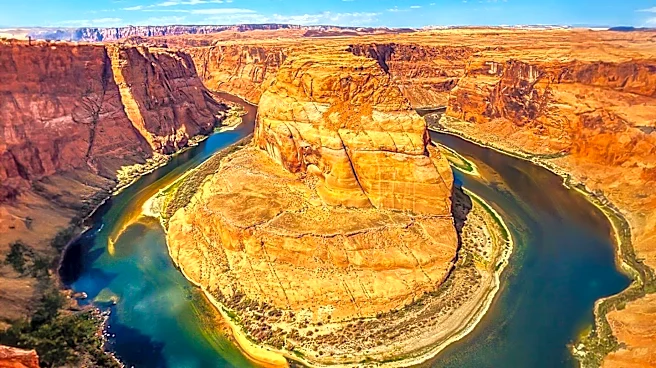
The appointment of Gina Gilson and the reorganization of the Center for Colorado River Studies are significant given the critical challenges facing the Colorado River. The river is a vital water source for millions across the Western United States, and its management has become increasingly complex due to drought, climate change, and growing demand. By positioning the center under the Janet Quinney Lawson Institute, USU aims to enhance the direct application of its research to policy and decision-making processes. This integration is crucial for developing effective, data-driven solutions to water scarcity and resource management in the basin. Gilson's background in water rights and policy, combined with Schmidt's continued expertise, provides a strong foundation for addressing these pressing environmental and societal issues, impacting agriculture, urban development, and ecological health across multiple states.
What's Next?
The Center for Colorado River Studies will continue its focus on data-driven, applied research under Gilson's interim leadership. The university will also conduct a search for a permanent director for the center. The reorganization under the Janet Quinney Lawson Institute for Land, Water, and Air is expected to foster closer collaboration between researchers and policymakers, potentially leading to more integrated and effective water management strategies for the Colorado River basin. Stakeholders across the basin, including state governments, agricultural communities, and environmental groups, will likely monitor the center's research and recommendations closely as they navigate ongoing water challenges. The institute's mission to connect high-quality research with informed land, water, and air policy in Utah suggests a proactive approach to addressing natural resource challenges.
Beyond the Headlines
The challenges facing the Colorado River extend beyond immediate water allocation, touching upon broader ethical and cultural dimensions of resource management. The river's health is intrinsically linked to the ecological balance of the region and the cultural heritage of numerous Indigenous communities. The center's work, particularly its emphasis on policy-relevant research, could influence long-term shifts in how water resources are valued, conserved, and distributed. This includes potentially re-evaluating existing water rights, promoting sustainable agricultural practices, and fostering interstate cooperation. The integration of scientific research with policy decisions highlights a growing recognition of the need for interdisciplinary approaches to complex environmental problems, setting a precedent for other regions facing similar resource constraints.