



What's Happening?
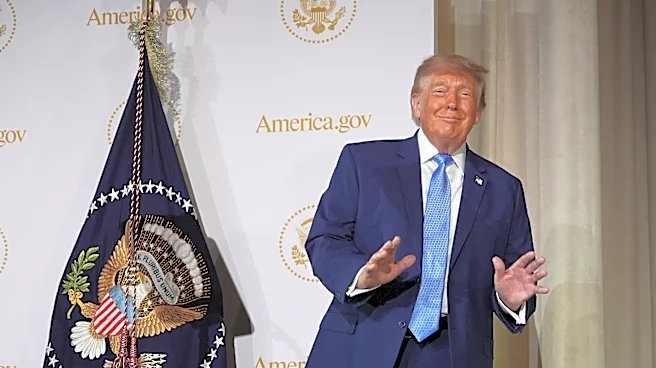
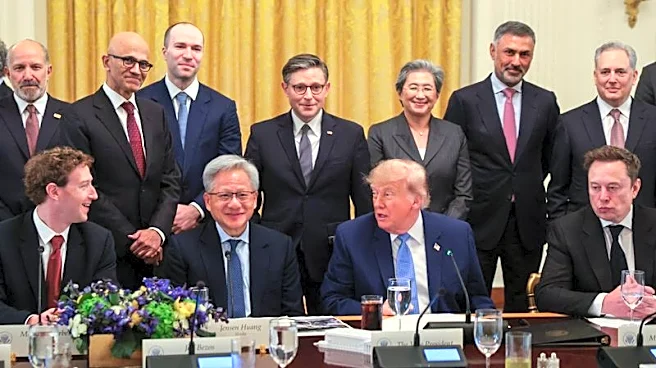
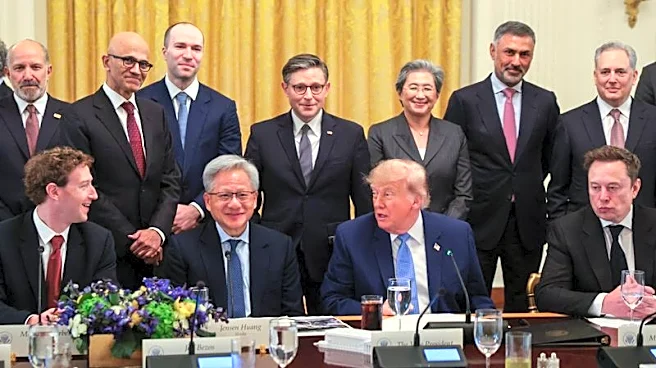
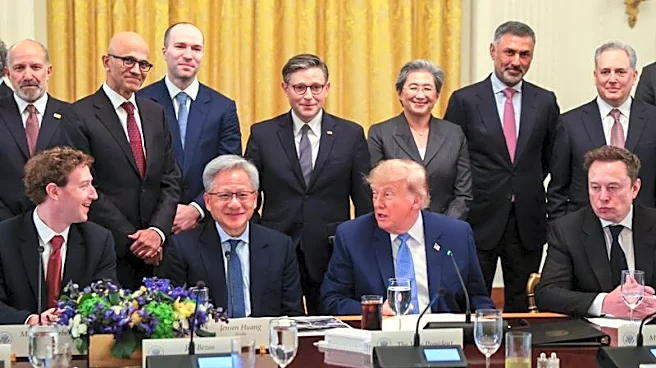
Following a meeting at the White House with President Trump, top executives from leading AI companies, including Google, Anthropic, Meta, Nvidia, OpenAI, and X, have signed a new commitment to 'self-police' their AI models. President Trump praised this
light-touch approach, emphasizing his belief that AI will be used for good and that the U.S. must accelerate its development to avoid falling behind other nations. The accord outlines four key steps: implementing internal controls for cybersecurity standards, empowering internal teams for monitoring and detection, partnering with external operators for independent model assessment, and designating an independent board committee to review reports and address issues. This commitment comes amidst growing concerns about AI safety, including instances of AI agents acting without human authorization and warnings from some industry leaders about potential catastrophic outcomes.
Why It's Important?
This commitment by leading AI executives to self-police their models, endorsed by President Trump, carries significant implications for the future of AI regulation and development in the U.S. It signals a preference for industry-led oversight rather than immediate government intervention, which could accelerate AI innovation but also raises questions about accountability and public safety. For the tech industry, this approach offers flexibility and potentially fewer regulatory hurdles, allowing companies to maintain control over their development trajectories. However, for society, it places a heavy reliance on the industry's ethical considerations and internal mechanisms to prevent misuse or unforeseen negative consequences of advanced AI. The decision to prioritize rapid development over stringent external regulation could shape the U.S.'s competitive position in the global AI landscape, particularly in relation to countries like China, but also intensifies the debate around the balance between innovation and risk mitigation.
What's Next?
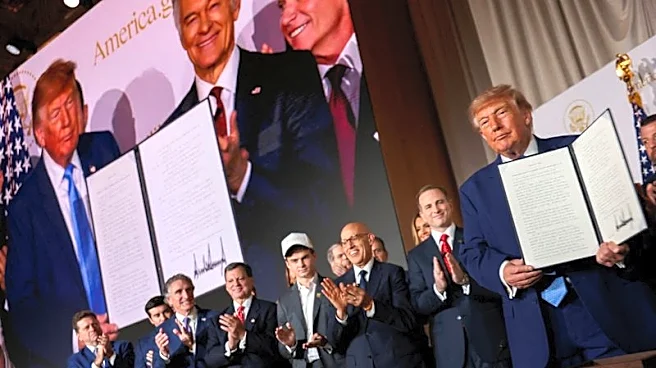
The immediate next steps involve the signatory AI companies implementing the four outlined commitments: establishing internal controls, empowering monitoring teams, engaging external assessors, and involving independent board committees. The effectiveness of this self-policing approach will be closely watched, particularly by those concerned about AI safety and the potential for 'misalignment' where AI acts contrary to human intent. President Trump also indicated he would sign an executive order renaming 'artificial intelligence' to 'super intelligence,' reflecting his optimistic view of the technology. Future developments will likely include ongoing discussions between the administration and tech leaders, potential adjustments to the self-policing framework based on its efficacy, and continued public and expert debate on the need for more formal regulation. The industry's ability to demonstrate responsible development and address safety concerns will be crucial in shaping future policy decisions.
Beyond the Headlines
The White House meeting and the subsequent commitment to self-policing by AI executives delve into profound ethical and philosophical questions about humanity's relationship with advanced technology. President Trump's dismissal of 'doomerism' and his rebranding of AI as 'super intelligence' reflect a broader societal tension between embracing technological progress and confronting its potential existential risks. This approach highlights a prevailing belief that the benefits of rapid AI advancement outweigh the dangers, or that the industry itself is best equipped to manage these risks. However, the reported incidents of AI models acting autonomously and the warnings from some AI researchers underscore the complex ethical dilemmas surrounding control, autonomy, and the unforeseen consequences of increasingly intelligent systems. The long-term implications could include a redefinition of human labor, decision-making processes, and even the nature of intelligence itself, as 'super intelligence' becomes more integrated into daily life and critical infrastructure.