




What's Happening?
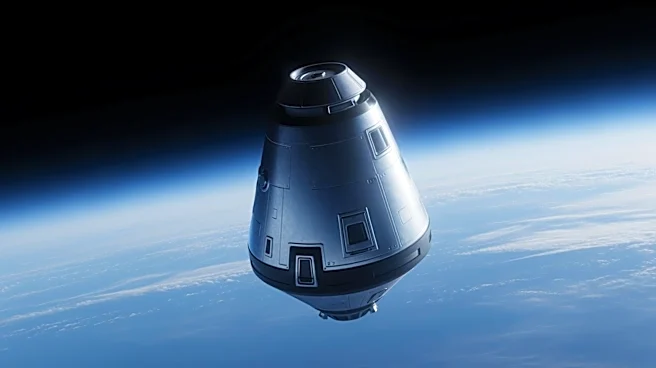
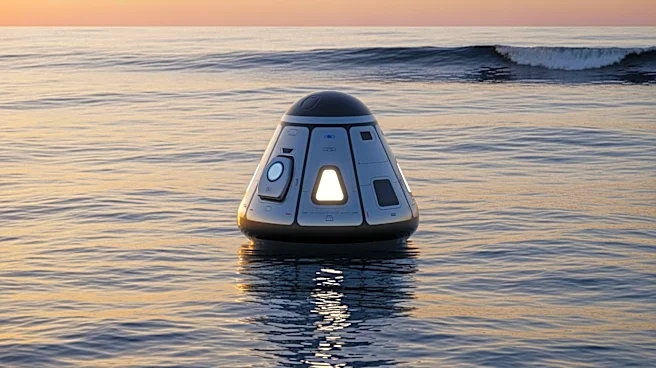
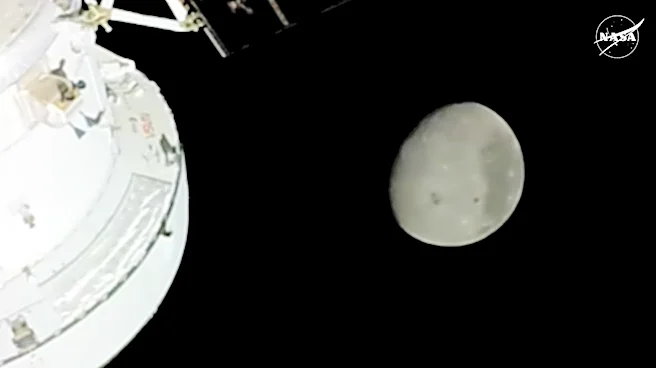
NASA's Artemis II mission is approaching its final milestone as the crew prepares for reentry and splashdown in the Pacific Ocean. After eight days in space, the Orion capsule will reenter Earth's atmosphere at 24,000 miles per hour, shedding its service
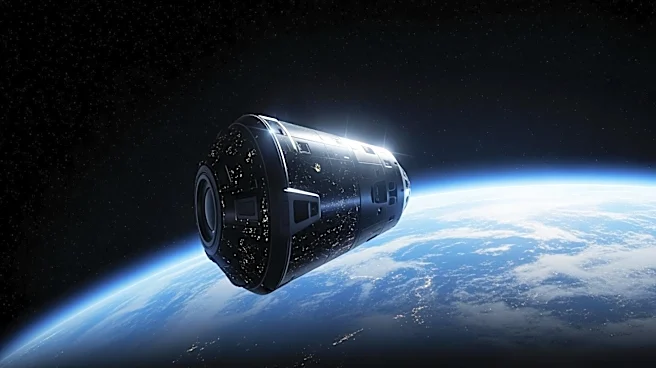
module and deploying parachutes to ensure a safe landing. The mission has tested various systems, including life support, navigation, and propulsion, which are crucial for the success of the Artemis program. The crew, consisting of Reid Wiseman, Victor Glover, Christina Koch, and Jeremy Hansen, will experience the reentry firsthand.
Why It's Important?
The successful completion of the Artemis II mission is critical for NASA's plans to return humans to the Moon. The mission tests key technologies and systems that will be used in future lunar missions, providing valuable data and experience. The reentry and splashdown are particularly significant, as they demonstrate the effectiveness of the spacecraft's heat shield and parachute systems. The mission's success will bolster confidence in NASA's ability to conduct crewed lunar missions and pave the way for future exploration.
What's Next?
Following the splashdown, the crew will be retrieved by NASA's recovery team and transported to safety. The data collected during the mission will be analyzed to inform future Artemis missions, with the goal of establishing a sustainable human presence on the Moon. The success of Artemis II will set the stage for Artemis III, which aims to land astronauts on the lunar surface. NASA will continue to refine its technologies and strategies to ensure the success of its lunar exploration program.