







What's Happening?
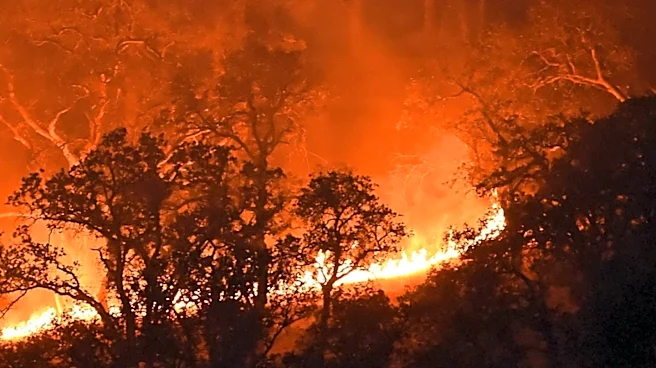
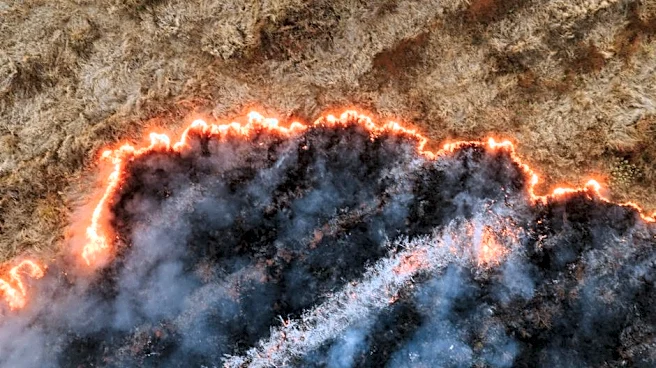
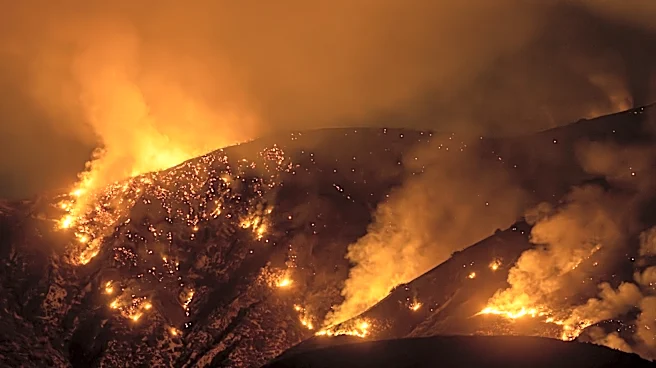
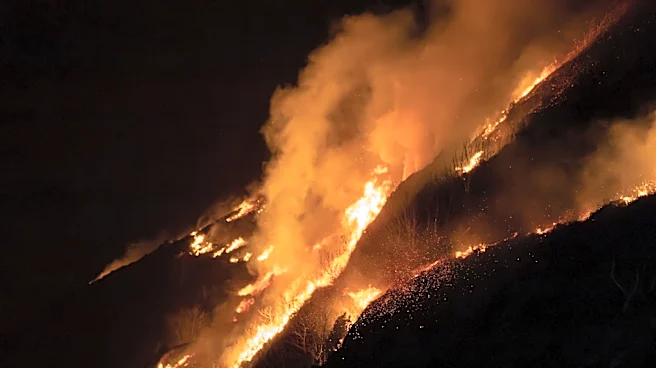
In Utah, a fast-moving wildfire known as the Cottonwood Fire has prompted the governor to declare an emergency and impose fireworks restrictions due to hot, dry, and windy conditions. The fire, which has become the largest currently burning in the U.S.,
has severely damaged the Eagle Point ski resort and forced evacuations in Beaver County. Firefighters are facing unprecedented challenges as air tankers and helicopters were grounded due to strong winds and low humidity. The fire has expanded to over 112 square miles, with smoke affecting air quality in nearby areas. Meteorologists warn of critical weather conditions persisting for the next 48 hours, with a cold front expected to bring winds that could further spread the fire.
Why It's Important?
The Cottonwood Fire highlights the increasing frequency and intensity of wildfires in the western U.S., exacerbated by persistent drought and extreme weather conditions. This situation poses significant risks to communities, infrastructure, and natural resources. The emergency declaration and fireworks ban underscore the urgent need for preventive measures to mitigate fire risks. The fire's impact on tourism, particularly in popular destinations like Zion and Bryce Canyon national parks, could have economic repercussions. Additionally, the situation raises concerns about the adequacy of current firefighting resources and strategies in the face of changing climate patterns.
What's Next?
As the fire continues to burn, authorities are preparing for potential power outages as a preventive measure against further fire risks. The public is advised to stay informed and prepared, especially with the upcoming July Fourth celebrations, which could increase fire hazards. The situation may prompt further restrictions and emergency measures if conditions do not improve. Long-term, this event may lead to discussions on enhancing fire management policies and infrastructure resilience in the face of climate change.