







What's Happening?
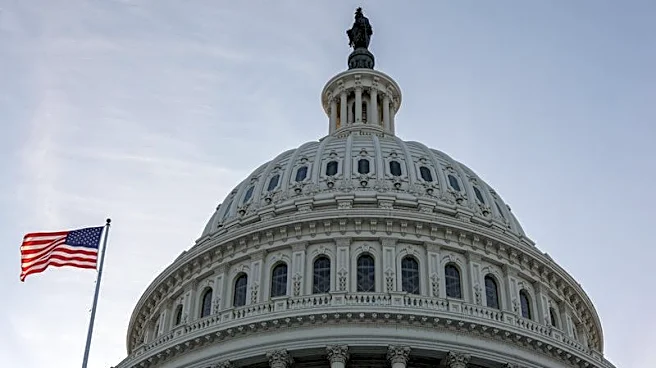
The House of Representatives recently failed to pass a resolution aimed at curbing President Donald Trump's war powers in Iran, resulting in a 212-212 deadlock. This resolution, supported by Democrats, sought to require the administration to cease hostilities
without congressional authorization. Notably, three Republicans—Thomas Massie of Kentucky, Brian Fitzpatrick of Pennsylvania, and Tom Barrett of Michigan—broke ranks with their party to support the measure. This vote follows a similar effort in the Senate, where three Republican senators, including Lisa Murkowski of Alaska, joined Democrats in an unsuccessful attempt to advance a measure to limit Trump's military actions in Iran. The House vote marked the first on this issue since the expiration of the 60-day period requiring congressional authorization for military action.
Why It's Important?
The failure to pass the resolution underscores the ongoing debate over the balance of war powers between Congress and the presidency. The War Powers Resolution of 1973 was designed to limit the president's ability to engage U.S. forces in hostilities without congressional consent, reinforcing the legislative branch's role in approving sustained military action. This deadlock highlights a small but significant faction within the Republican Party willing to challenge President Trump's approach to military engagement, potentially influencing future legislative efforts. The outcome of this vote could impact U.S. foreign policy and military strategy, as well as the broader political landscape, by emphasizing the need for congressional oversight in military decisions.
What's Next?
While the resolution did not pass, the issue of war powers and congressional oversight is likely to remain a contentious topic. Lawmakers may continue to push for measures that reinforce Congress's constitutional role in authorizing military action. The division within the Republican Party could lead to further debates and potential shifts in policy, especially if hostilities in Iran or other regions escalate. Future legislative efforts may focus on revising or strengthening the War Powers Resolution to ensure clearer guidelines and accountability for military engagements.