






What's Happening?
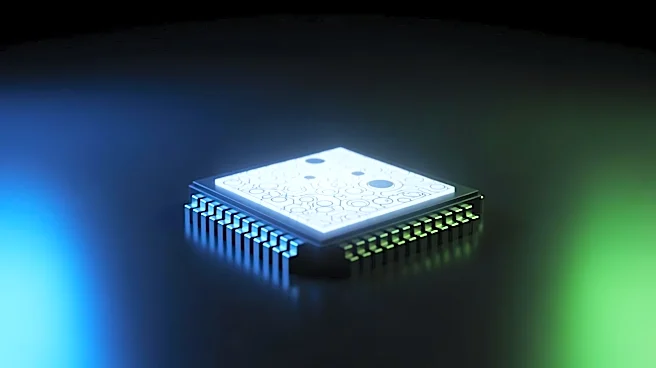
NASA's Artemis II mission includes a groundbreaking experiment involving 'organ-on-a-chip' technology. Chips containing bone marrow cells from the astronauts are being used to study the effects of deep-space flight on human biology, particularly radiation
exposure. These chips, part of the Avatar program, aim to model the astronauts' biological responses to space conditions. The experiment is a proof-of-concept to determine if these chips can accurately reflect changes in the astronauts' bodies during space travel. The long-term goal is to use this technology to anticipate health effects and develop personalized medical regimens for astronauts, potentially paving the way for safer long-term space missions.
Why It's Important?
This experiment represents a significant step forward in understanding the biological impacts of space travel, which is crucial for future missions to the moon and beyond. By using organ-on-a-chip technology, NASA can potentially predict and mitigate health risks associated with radiation and microgravity, improving astronaut safety. This technology could also revolutionize medical research on Earth by providing more accurate models for drug testing and reducing reliance on animal models. The success of this experiment could lead to more personalized and effective healthcare solutions for astronauts, enhancing the feasibility of long-term human presence in space.
What's Next?
Following the Artemis II mission, scientists will analyze the chips to compare the biological changes observed in space with those on Earth. This analysis will help determine the reliability of the chips as models for human biology in space. If successful, NASA may expand the use of this technology in future missions, potentially sending chips ahead of human crews to assess environmental impacts on different organ systems. This could lead to more comprehensive health monitoring and preparation for astronauts, supporting NASA's goal of establishing a sustainable human presence on the moon.