


What's Happening?
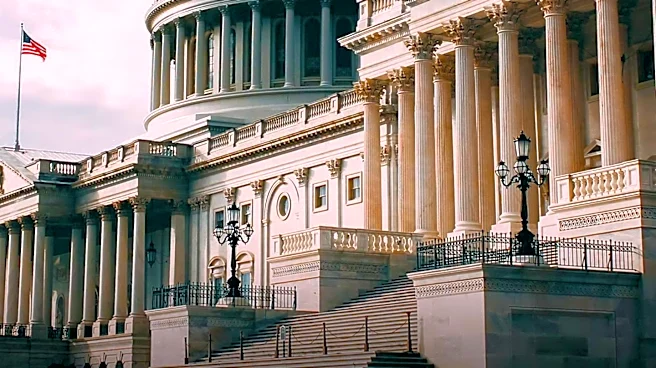
TMZ, traditionally known for its celebrity gossip, has expanded its coverage to include members of Congress, treating Capitol Hill as a new 'reality show.' The media outlet has launched a bureau in Washington, D.C., aiming to mix levity and gossip with
legitimate political exclusives. This shift was highlighted during a recent interview with Georgia Democratic Senator Jon Ossoff at Reagan Washington National Airport, where TMZ's Charlie Cotton discussed both Ossoff's reelection campaign and their shared Australian heritage. The move to cover Congress comes after TMZ gained attention for viral photos of vacationing lawmakers during a government shutdown. The new D.C. bureau, led by Cotton and Jacob Wasserman, seeks to engage politically disengaged audiences by presenting political figures in a more relatable and entertaining manner.
Why It's Important?
TMZ's foray into political reporting could influence how the public perceives and engages with political figures. By blending entertainment with politics, TMZ may attract a younger, less politically engaged audience, potentially increasing political awareness and participation. This approach could also challenge traditional media outlets by offering a different perspective on political coverage, focusing on personality and relatability rather than just policy and governance. However, this shift raises questions about the balance between entertainment and serious journalism, and whether such coverage might trivialize important political issues.
What's Next?
As TMZ continues to develop its political coverage, it may face both opportunities and challenges. The outlet could expand its audience by appealing to those who are typically uninterested in politics, potentially influencing public opinion and voter engagement. However, it may also encounter criticism from traditional media and political figures who question the appropriateness of mixing entertainment with serious political discourse. The success of this venture will likely depend on TMZ's ability to balance entertainment with informative content, and how well it can adapt its celebrity-focused model to the political arena.
Beyond the Headlines
TMZ's approach to political reporting could have broader implications for media ethics and the role of journalism in society. By prioritizing entertainment value, there is a risk of oversimplifying complex political issues, which could impact public understanding and discourse. Additionally, the focus on personality and gossip may shift attention away from substantive policy discussions, potentially influencing how political figures are held accountable. This development highlights the evolving landscape of media consumption, where the lines between news and entertainment continue to blur.