




What's Happening?
A lawsuit has been filed in federal court against the State of South Dakota concerning its new proof-of-citizenship requirement for voter registration. The suit was brought by a nonprofit organization and a Sioux Falls voter. Senate Bill 175, signed into
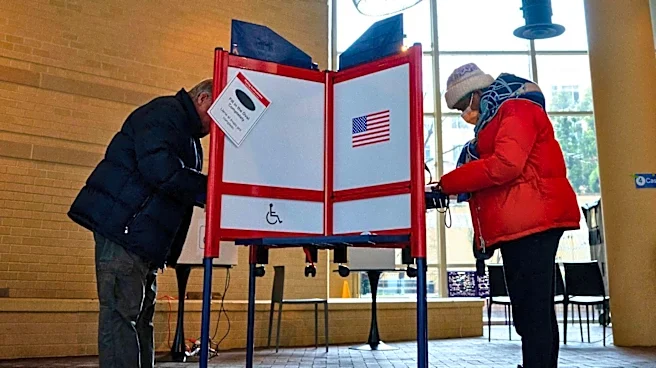
law by Republican Gov. Larry Rhoden in March, mandates that individuals provide documentary proof of citizenship when registering to vote. Acceptable forms of proof include birth certificates, passports, driver’s licenses, non-driver’s identification cards, or tribal identification cards. Those who do not provide such documentation are registered as 'federal-only' voters, meaning they can only vote in federal elections and not state or local contests. The lawsuit alleges that the law's implementation has disqualified eligible voters due to administrative issues and has not provided clear pathways for correcting registration problems.
Why It's Important?
This lawsuit carries significant implications for voting rights and election integrity in South Dakota and potentially sets a precedent for other states considering similar legislation. The core issue revolves around balancing the state's interest in preventing voter fraud against the constitutional right to vote. Critics argue that strict proof-of-citizenship requirements disproportionately affect certain demographics, such as the elderly, low-income individuals, or those without easy access to required documents, thereby suppressing voter turnout. If the court rules against South Dakota, it could force the state to revise its voter registration procedures, making it easier for citizens to register and participate in all elections. Conversely, a ruling in favor of the state could embolden other states to enact similar laws, potentially leading to a patchwork of varying voter registration requirements across the U.S. and ongoing legal challenges.
What's Next?
The federal court will now review the lawsuit, which names South Dakota Secretary of State Monae Johnson, the state Board of Elections, and its members as defendants. The plaintiffs are seeking several remedies, including a court order to accept photocopies of driver’s licenses, tribal IDs, and non-driver IDs for voter registration, and to rescind guidance requiring in-person registration for those using such IDs. They also request that the state provide accurate explanations to 'federal-only' registrants and offer them opportunities to challenge the designation. The legal proceedings will likely involve arguments from both sides regarding the constitutionality and practical implications of Senate Bill 175. The outcome of this case could lead to an injunction against parts of the law or a full trial, potentially impacting voter registration processes for upcoming elections in South Dakota.
Beyond the Headlines
The legal challenge in South Dakota reflects a broader national debate over voter access and election security. Proponents of stricter voter ID laws often cite concerns about potential voter fraud, while opponents argue that such measures are often thinly veiled attempts at voter suppression. This case highlights the tension between these two perspectives and the role of the judiciary in interpreting election laws. Beyond the immediate legal outcome, the lawsuit could influence public perception of election fairness and trust in democratic processes. It also underscores the ongoing efforts by voting rights organizations to protect and expand access to the ballot box, particularly in states where new voting restrictions are being implemented. The resolution of this case could contribute to the evolving legal landscape surrounding voting rights in the United States.