


What's Happening?
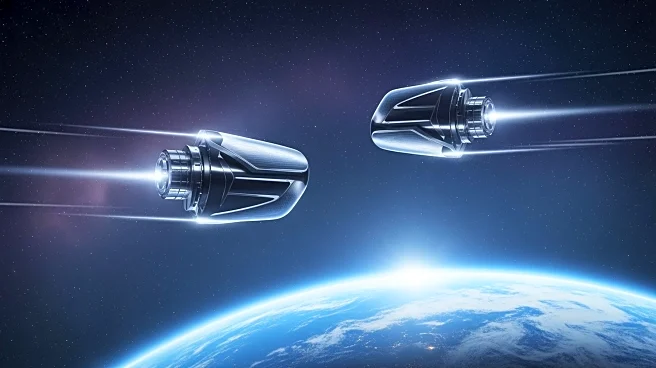
The rapid increase in satellite launches has heightened the risk of collisions in Earth's orbit, potentially leading to a chain reaction of debris. Jonathan McDowell, a retired astrophysicist from the Harvard-Smithsonian Center for Astrophysics, warns
of the potential for a cascade effect, where collisions create more debris, further increasing the risk of additional collisions. The number of objects in orbit has grown exponentially, with over 30,000 currently tracked. This surge in activity, driven by both public and private entities, poses a significant challenge for space traffic management.
Why It's Important?
The accumulation of space debris poses a threat to future space missions and the safety of existing satellites. A significant collision could create a near-impenetrable layer of debris, making space launches dangerous and potentially trapping humans on Earth. Effective management of orbital traffic is crucial to prevent such scenarios and ensure the sustainability of space exploration. The situation underscores the need for international cooperation and the development of technologies to mitigate space debris.
What's Next?
Efforts are underway to develop methods for deorbiting defunct satellites and reducing the risk of collisions. Space agencies are exploring technologies such as nets, robotic arms, and lasers to capture or redirect debris. Continued collaboration among international stakeholders will be essential in implementing effective space traffic management strategies. The scientific community will also focus on enhancing tracking systems and developing policies to regulate satellite launches and operations.