
What's Happening?
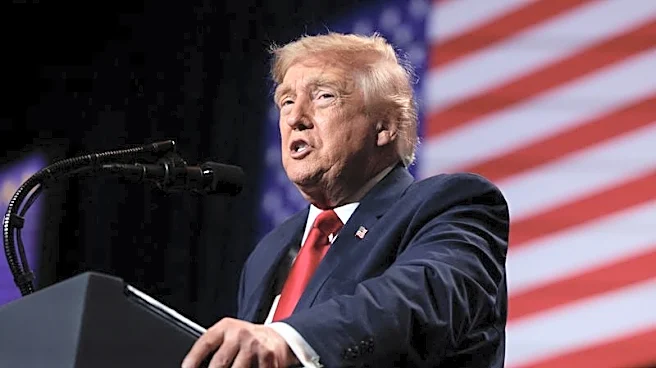
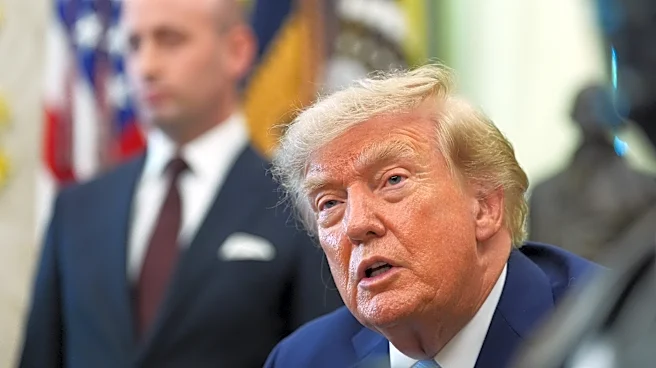
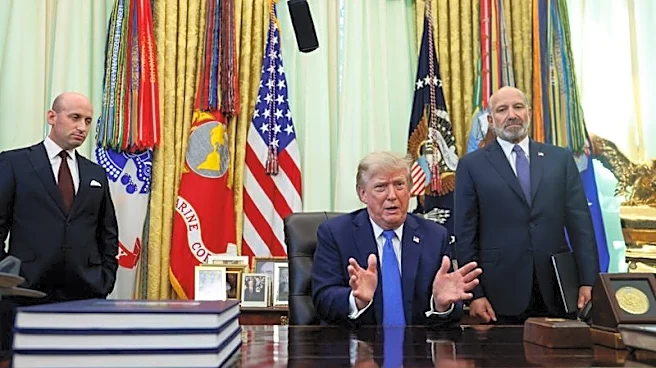
President Trump has issued a new executive order aimed at restricting birthright citizenship in the United States. This order targets children born to non-citizen parents who are members of designated foreign terrorist organizations, foreign government
employees, or involved in 'birth tourism.' The order also affects children born in U.S. territories where citizenship is not conferred by federal statute, such as American Samoa. This move follows a previous Supreme Court ruling in Trump v. Barbara, which invalidated an earlier, broader order on similar grounds. The current order is seen as unconstitutional by many legal experts, as it contradicts the Citizenship Clause of the Fourteenth Amendment, which grants citizenship to all children born in the U.S. and subject to its jurisdiction.
Why It's Important?
The executive order has significant implications for U.S. immigration policy and constitutional law. It challenges the established interpretation of the Citizenship Clause, potentially affecting thousands of children born in the U.S. to non-citizen parents. The order could lead to legal battles, as it is expected to be challenged in court. If upheld, it may set a precedent for further restrictions on birthright citizenship, impacting immigrant communities and international relations. The order also raises ethical concerns about penalizing children for their parents' affiliations or actions, which could lead to broader debates on human rights and equality under the law.
What's Next?
Legal challenges to the executive order are anticipated, with potential plaintiffs including state governments or affected individuals. The outcome of these challenges could influence future immigration policies and interpretations of the Fourteenth Amendment. Additionally, the order may prompt legislative responses or further executive actions, depending on its reception in the courts and public opinion. The situation will likely remain a contentious issue in U.S. politics, with implications for the upcoming elections and broader debates on immigration reform.