



What's Happening?
Congressman Cliff Bentz, alongside Democratic Senators Ron Wyden and Jeff Merkley, and his predecessor Greg Walden, has been advocating for streamlining the process of forest management to accelerate efforts in thinning overcrowded forests. This advocacy
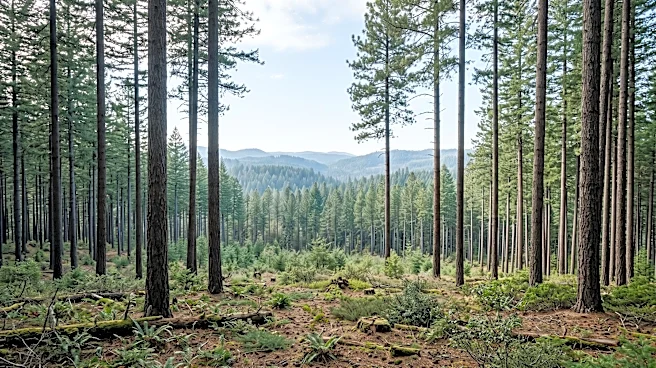
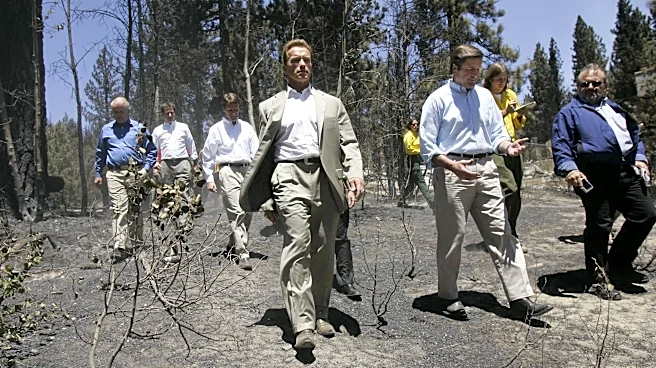
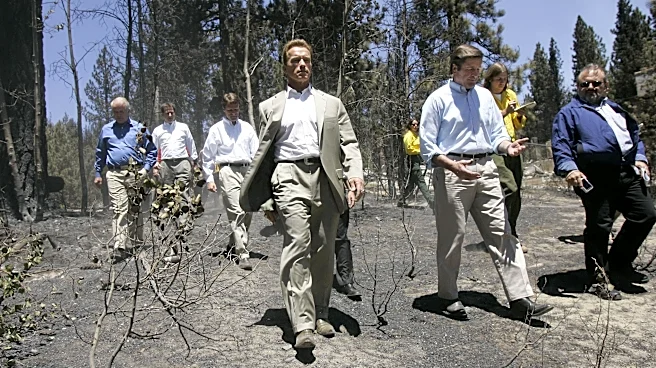
comes in the context of recent wildfires, such as the McCully Fire, which burned approximately 13,600 acres. The U.S. Forest Service, in response to the fire, created firebreaks by cutting trees, yielding about 2 million board-feet of timber. This action, while beneficial in producing valuable logs and creating firebreaks, highlights a broader issue: the Forest Service often acts with alacrity only in the wake of a wildfire. The agency estimates that hundreds of thousands of acres have tree densities exceeding historical levels, increasing wildfire risk. Despite progress in some areas, such as projects on Black Mountain and the East Face, these initiatives typically require years of environmental studies and public comment periods, leading to slow implementation. The ongoing challenge is to reduce fire threats across the Blue Mountains, a task projected to take decades even under ambitious schedules.
Why It's Important?
The slow pace of forest management, despite bipartisan congressional advocacy, poses significant risks to public safety, natural resources, and local economies in Oregon. Overcrowded forests are more susceptible to catastrophic wildfires, which can devastate communities, destroy wildlife habitats, and incur massive firefighting costs. The current reactive approach, where significant action often follows a fire, is inefficient and costly. Streamlining the process, as advocated by Congressman Bentz and others, could lead to more proactive forest thinning, reducing the intensity and spread of future fires. This would protect timber resources, improve air quality, and safeguard communities from the immediate and long-term impacts of wildfires. The economic implications are also substantial; a more consistent timber supply from managed thinning could support local logging industries, while preventing large-scale fires reduces the economic burden of recovery and rebuilding.
What's Next?
The ongoing advocacy by Congressman Bentz and other Oregon lawmakers suggests continued legislative efforts to reform forest management policies. Future legislative sessions may see proposals aimed at reducing regulatory obstacles and accelerating the implementation of forest thinning projects. The U.S. Forest Service will likely face continued pressure to expedite its processes and adopt more proactive strategies for wildfire prevention. Stakeholders, including environmental groups, timber industries, and local communities, will continue to engage in discussions regarding the balance between environmental protection and effective forest management. The success of these efforts will depend on finding common ground and implementing policies that allow for timely and effective interventions to reduce wildfire risks across Oregon's forests.
Beyond the Headlines
The situation in Oregon's forests reflects a broader national challenge in managing public lands amidst increasing wildfire risks driven by climate change and historical land management practices. The reliance on wildfires as a catalyst for action highlights a systemic issue where bureaucratic hurdles and competing interests can impede necessary preventative measures. Ethically, the debate centers on balancing ecological preservation with human safety and economic stability. Legally, federal laws governing environmental reviews and public input often create lengthy timelines, which, while intended to ensure thoroughness, can inadvertently exacerbate risks in rapidly changing environmental conditions. Culturally, there is a growing awareness of the need for more adaptive and integrated approaches to land management that consider both ecological health and community resilience in the face of escalating climate impacts.