









What's Happening?
In 1965, the United States Mint began producing Special Mint Sets, a direct response to a national coin shortage. This shortage was primarily caused by an increase in the price of silver, leading citizens to hoard silver coins. The Coinage Act of 1965 was subsequently
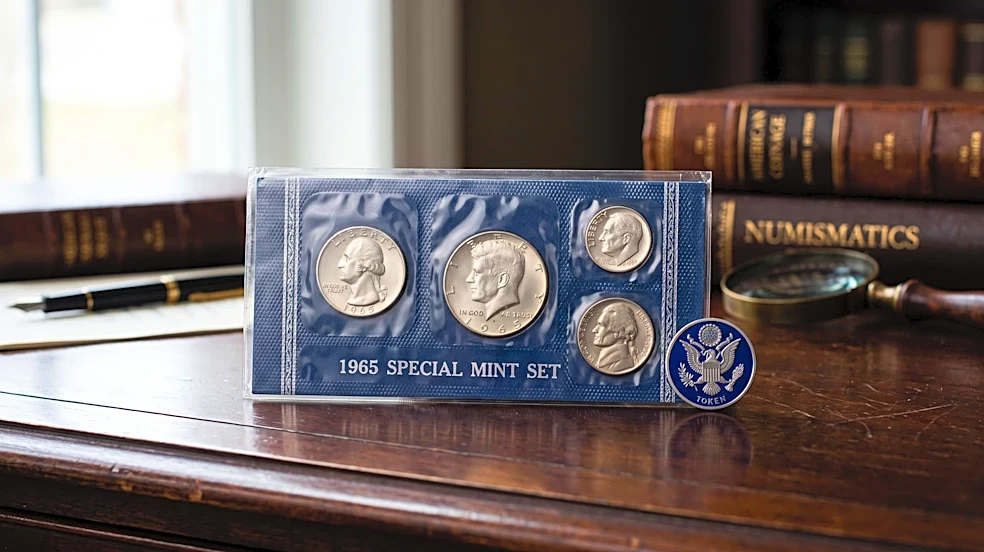
passed, which reduced the silver content in half dollars and eliminated it entirely from dimes and quarters. As part of this change, the Mint halted the production of yearly proof sets and introduced these Special Mint Sets for collectors. Each 1965 Special Mint Set contains one coin of each denomination and a blue and silver token with the set’s name. These coins, produced at the San Francisco Mint, feature a unique satin-like finish and are sealed in protective plastic film, further secured by two pieces of cardboard. The sets were issued for only one year, making their supply limited, and included an explanatory sheet from the Director of the Mint detailing their significance.
Why It's Important?
The introduction of the 1965 Special Mint Sets signifies a pivotal moment in U.S. numismatic history and reflects broader economic pressures of the mid-1960s. The coin shortage and the subsequent Coinage Act of 1965 had a profound impact on the U.S. monetary system, transitioning away from silver coinage for most denominations. This shift affected not only the intrinsic value of U.S. currency but also the practices of coin collectors and the Mint's production strategies. For collectors, these sets represent a unique, uncirculated piece of American history, offering a glimpse into a period of significant change in coin composition and production. The limited mintage and single-year production of these sets contribute to their historical and collectible value, illustrating how economic factors can directly influence government policy and the production of national currency.
What's Next?
While the 1965 Special Mint Sets are historical artifacts, their continued presence in the collector's market ensures ongoing interest. Collectors can still acquire these sets, which are over half a century old, through various channels. The U.S. Mint continues to produce various numismatic products, including modern mint sets and commemorative coins, building on a legacy that includes the 1965 Special Mint Sets. The historical context of the 1965 coin shortage and the subsequent legislative changes remain relevant for understanding the evolution of U.S. coinage and the Mint's role in managing currency supply and demand. Future numismatic releases from the U.S. Mint will continue to be influenced by both economic conditions and collector demand, much like the circumstances that led to the creation of these special sets.
Beyond the Headlines
The story of the 1965 Special Mint Sets extends beyond mere coin collection; it highlights the intricate relationship between commodity prices, public behavior, and government policy. The hoarding of silver coins by citizens in response to rising silver prices demonstrates how market forces can disrupt everyday economic functions and necessitate governmental intervention. The Coinage Act of 1965, which altered the metallic composition of U.S. coins, was a significant legislative response to maintain the integrity and availability of currency. This event underscores the broader economic principle that the intrinsic value of currency can influence its circulation and public trust. Furthermore, the creation of 'special' sets for collectors during a period of crisis illustrates the Mint's efforts to balance practical currency needs with the interests of the numismatic community, showcasing a nuanced approach to managing national coinage.