
What's Happening?
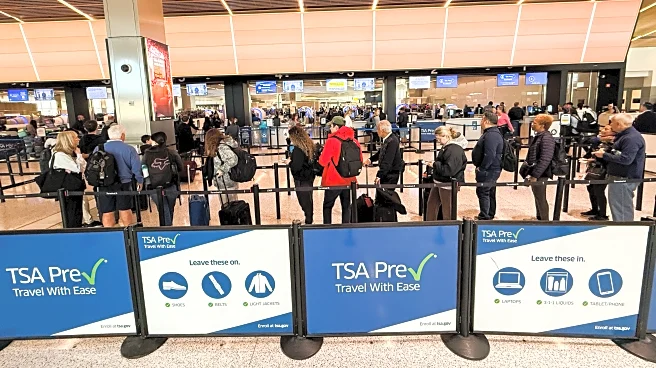
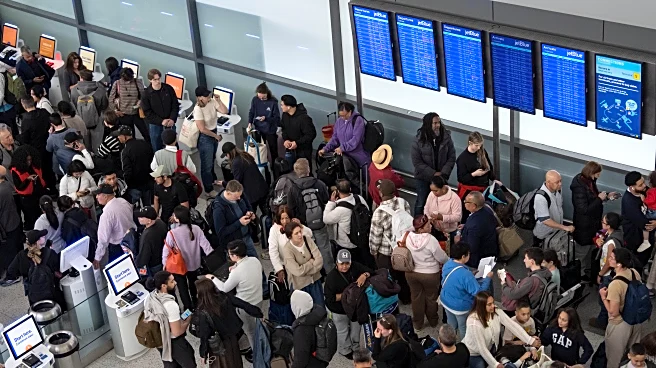
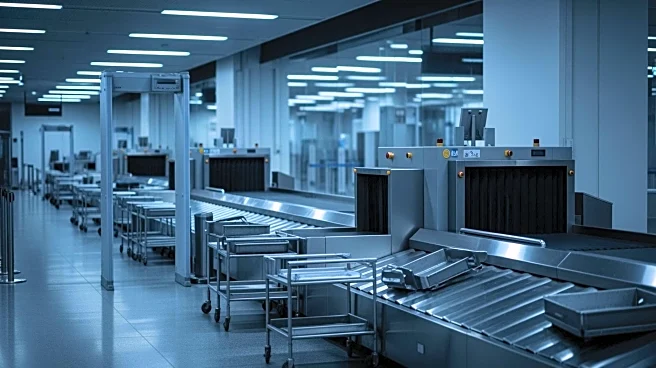
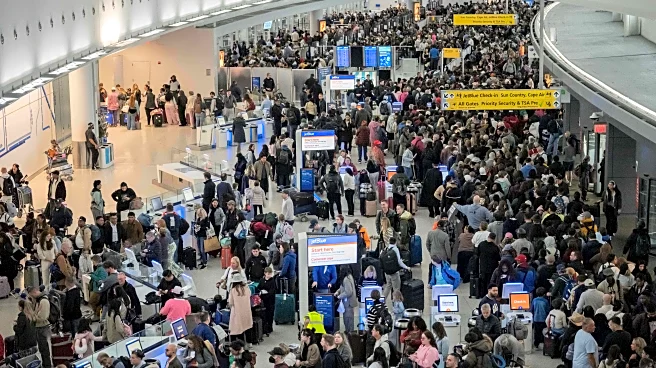
During the spring break season in the U.S., travelers are experiencing long lines at airport security checkpoints due to a shutdown of the Department of Homeland Security (DHS). This shutdown has resulted from Congressional Democrats' refusal to fund
the agency, aiming to push for reforms in federal immigration enforcement practices. As a consequence, Transportation Security Administration (TSA) staff, deemed essential workers, are working without pay, leading to significant staffing shortages. Major airports like those in Houston and Atlanta have reported wait times of up to two hours, while New Orleans's Louis Armstrong International Airport has advised passengers to arrive three hours early. President Trump has threatened to deploy Immigration and Customs Enforcement (ICE) agents to manage airport security if funding is not restored. The situation is exacerbated by severe weather and increased travel demand, with an estimated 2.8 million people traveling daily on U.S. airlines during March and April.
Why It's Important?
The shutdown of DHS and the resulting TSA staffing shortages have significant implications for U.S. air travel and security. The prolonged wait times and potential for further disruptions could impact the travel industry, leading to financial losses for airlines and airports. Additionally, the strain on TSA workers, who are working without pay, raises concerns about employee morale and retention, as over 300 officers have already quit. The situation also highlights the broader political standoff over immigration policy, with potential repercussions for federal operations and public safety. The travel disruptions could affect millions of passengers, leading to increased frustration and potential economic impacts on tourism and related sectors.
What's Next?
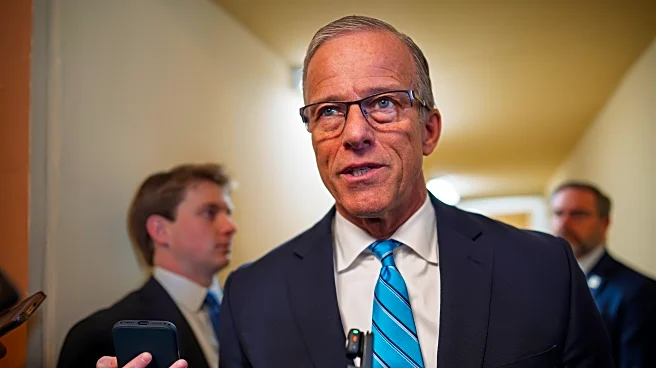
If the shutdown continues, the situation at airports could worsen, with more TSA staff potentially calling out sick or quitting. This could lead to the temporary closure of smaller airports and further delays at major hubs. The ongoing negotiations between a bipartisan group of senators and the White House may determine the resolution of the shutdown. Meanwhile, travelers are advised to prepare for uncertainty by checking airport wait times, budgeting extra time for security, and considering alternative screening options like biometric programs. The potential deployment of ICE agents to airports remains a contentious issue, with implications for immigration enforcement and civil liberties.