



What's Happening?
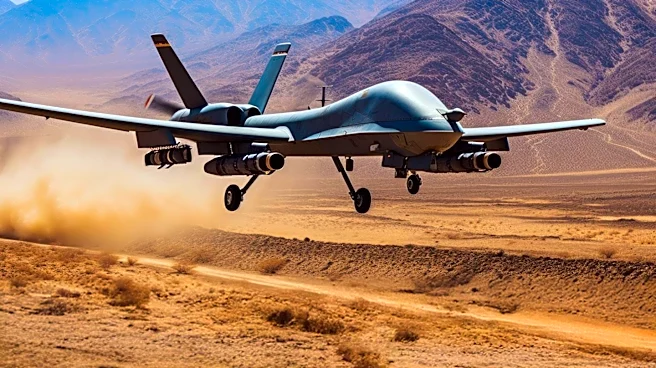
Ukraine is increasingly incorporating artificial intelligence (AI) into its drone operations, emphasizing human oversight despite the war's growing robotic nature. The country has made significant progress in using AI for decision-making, drone navigation,
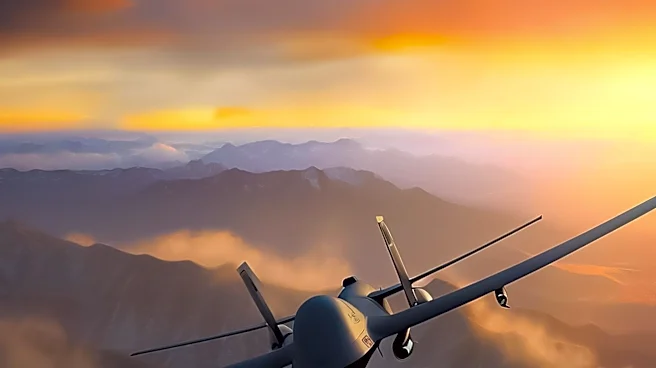
terminal guidance, and precision. Ukraine's defense ministry launched a program to incorporate AI into defense processes, and local companies are developing AI-based components for drones, missiles, radars, and other systems. The use of drone swarms, where multiple drones coordinate tasks without constant human intervention, has been demonstrated by Ukraine, creating challenges for conventional air defenses. Russia has amassed thousands of drones, including the Geran UAVs, for potential large-scale attacks on Ukraine.
Why It's Important?
The integration of AI into military operations represents a significant shift in warfare, potentially altering the balance of power in the region. For Ukraine, leveraging AI in drone technology could enhance its defensive capabilities against Russian aggression, providing a strategic advantage. This development also highlights the increasing role of technology in modern conflicts, where AI can improve efficiency and precision in military operations. The use of AI-assisted drones could influence future military strategies and defense policies, as nations seek to incorporate advanced technologies into their arsenals. The situation underscores the importance of maintaining human oversight in AI-driven warfare to prevent unintended consequences.
What's Next?
Ukraine's continued development and integration of AI in military operations may prompt other nations to accelerate their own AI initiatives. As the conflict persists, Ukraine may further refine its AI technologies, potentially leading to new innovations in drone warfare. The international community may also respond by reassessing regulations and ethical considerations surrounding AI in military applications. Additionally, Ukraine's advancements could influence NATO's strategies, as the alliance seeks to bolster its defenses against potential threats from Russia. The ongoing conflict may serve as a testing ground for AI technologies, shaping future military doctrines and international security policies.
Beyond the Headlines
The ethical implications of AI in warfare are profound, raising questions about accountability and the potential for autonomous systems to make life-and-death decisions. The integration of AI into military operations challenges existing legal frameworks and necessitates new regulations to ensure responsible use. Furthermore, the reliance on AI technologies could lead to a technological arms race, as nations compete to develop more advanced systems. The situation also highlights the need for international cooperation to address the risks associated with AI in warfare, including the potential for escalation and unintended consequences.