





What's Happening?
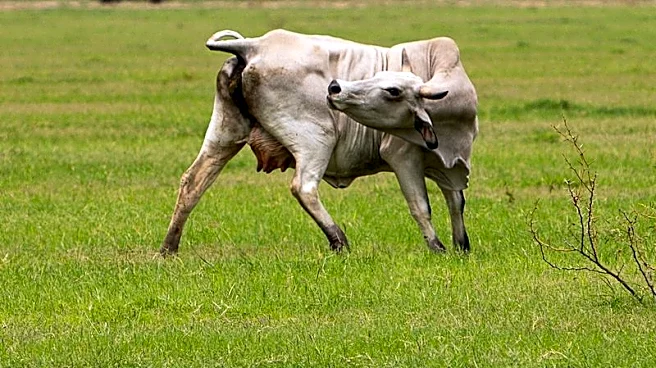
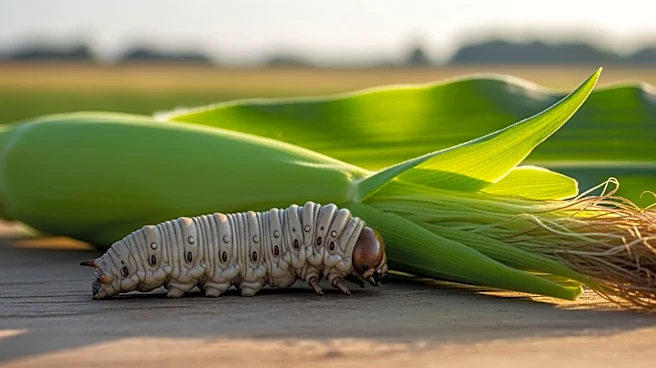
The U.S. Department of Agriculture (USDA) has confirmed a second case of the New World screwworm in Texas, prompting Canada to temporarily ban livestock imports from the region. The screwworm, a parasitic fly whose larvae consume living tissue, was detected
in a calf in Zavala County, Texas. This follows an earlier case in La Pryor, Texas, near the U.S.-Mexico border. The USDA, along with the Texas Animal Health Commission, has established a quarantine zone to prevent the spread of the parasite. Texas Governor Greg Abbott has expanded a statewide disaster declaration to combat the outbreak, reallocating state resources and accelerating the deployment of sterile flies to disrupt the screwworm's reproductive cycle. The Canadian Food Inspection Agency has restricted livestock imports from Texas, citing the potential threat to animal health, although the colder Canadian climate is less conducive to the fly's long-term survival.
Why It's Important?
The screwworm outbreak poses a significant threat to the U.S. cattle industry, particularly in Texas, which is a major hub for cattle production. A widespread infestation could lead to economic losses by reducing cattle supplies and increasing beef prices. The quarantine and import bans could disrupt trade and affect the livelihoods of ranchers and related industries. The situation underscores the importance of biosecurity measures and international cooperation in managing animal health threats. The outbreak also highlights the potential for cross-border animal health issues, necessitating vigilant monitoring and rapid response strategies to prevent further spread.
What's Next?
Efforts to control the screwworm outbreak will continue, with the USDA and state officials working to contain the parasite and prevent further cases. The use of sterile flies is a key strategy in breaking the reproductive cycle of the screwworm. Monitoring and testing of livestock in the affected areas will be ongoing. The Canadian import ban will remain in place until the risk is mitigated. Stakeholders, including ranchers and government agencies, will need to collaborate closely to manage the outbreak and minimize its impact on the cattle industry.