




What's Happening?
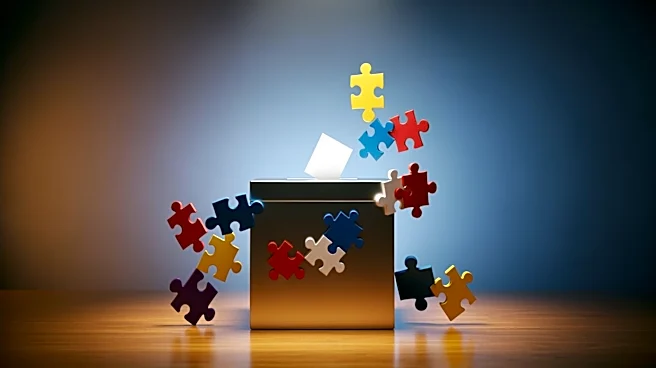
California's 'jungle primary' system, implemented under former Governor Arnold Schwarzenegger, allows all candidates for a particular office to run on the same ballot, with the top two vote-getters advancing to the general election, regardless of party
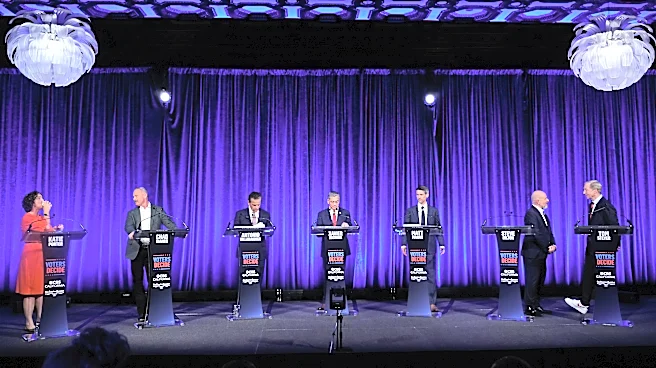
affiliation. This system, intended to foster competition, has led to concerns among Democrats about vote dilution, potentially allowing two Republicans to advance in a predominantly Democratic state. Recent developments in the gubernatorial race, including the suspension of Democratic frontrunner Eric Swalwell's campaign and President Trump's endorsement of Republican Steve Hilton, have intensified these concerns. Democratic strategist Steven Maviglio is advocating for a 2028 ballot measure to repeal the system, citing the risk of Democrats having to choose between two Republicans in the general election.
Why It's Important?
The 'jungle primary' system's impact on California's political landscape is significant, as it can alter the balance of power in a state known for its Democratic stronghold. The potential for two Republicans to advance in a general election could shift policy directions and affect legislative priorities. This system also influences candidate strategies, as they must appeal to a broader electorate beyond their party base. The push for reform highlights ongoing debates about electoral fairness and representation, with implications for voter engagement and party dynamics. The outcome of this reform effort could set a precedent for other states considering similar electoral systems.
What's Next?
The proposed repeal of the 'jungle primary' system is in its early stages, requiring a summary and title from the California attorney general and an assessment of its cost by a legislative analyst. A significant number of registered voters must support the initiative for it to advance. If successful, the measure could appear on the 2028 ballot, potentially reshaping California's electoral process. Stakeholders, including political parties and advocacy groups, are likely to engage in campaigns for or against the measure, influencing public opinion and voter turnout. The outcome could affect future elections and party strategies in California.