



What's Happening?
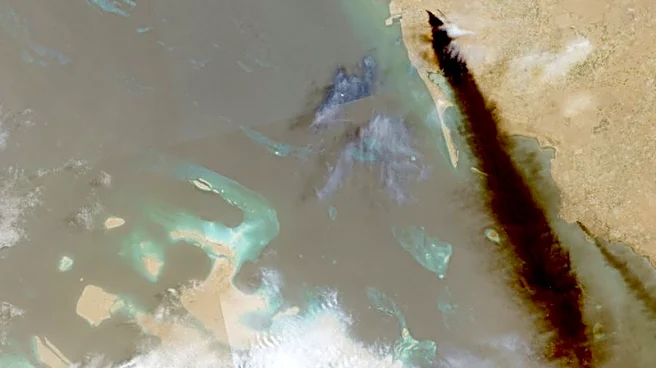
Libya's National Oil Corporation is contemplating declaring force majeure on exports from the Zawiya oil terminal following a series of drone attacks. The Zawiya terminal, with a daily capacity of 120,000 barrels, has been targeted multiple times, resulting
in the destruction of a storage tank containing 4.5 million liters of gasoline. These attacks exacerbate local fuel shortages and highlight the ongoing instability in Libya's oil sector. Despite these challenges, Libya aims to increase its oil production from 1.4 million barrels per day to 2 million by the early 2030s, supported by a $2 billion budget allocation.
Why It's Important?
The potential declaration of force majeure could disrupt global oil markets, particularly affecting European and Asian countries reliant on Libyan oil. The attacks underscore the vulnerability of Libya's oil infrastructure to political and military conflicts, which could deter foreign investment and complicate efforts to boost production. The situation also highlights the broader geopolitical risks in the region, which could impact global oil prices and supply stability.
What's Next?
If force majeure is declared, it could lead to a temporary halt in Libyan oil exports, prompting affected countries to seek alternative sources. The Libyan government may need to enhance security measures to protect its oil infrastructure and reassure investors. International stakeholders, including OPEC, may monitor the situation closely to assess its impact on global oil supply and prices.