



What's Happening?
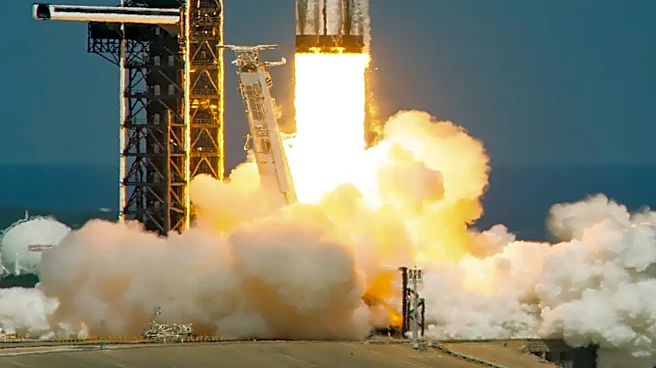
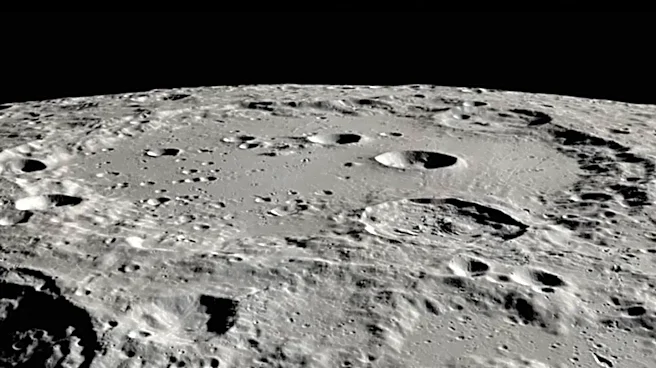
A piece of a SpaceX Falcon 9 rocket crashed into the moon on August 5, 2026. The upper-stage of the rocket, weighing 8,800 pounds, impacted the lunar surface near the Einstein crater at a speed of approximately 5,400 mph. This event was predicted by independent
astronomer Bill Gray using ground telescope observations. The crash was a result of the rocket's uncontrolled orbit, influenced by solar activity and gravitational forces after it exhausted its fuel. South Korea's lunar orbiter, Danuri, was among the first to capture images of the new crater created by the impact. NASA is also attempting to locate and observe the crash site using its Lunar Reconnaissance Orbiter.
Why It's Important?
The crash of the SpaceX Falcon 9 rocket into the moon highlights the challenges and risks associated with space debris and uncontrolled orbits. It underscores the importance of responsible space exploration and the need for effective disposal solutions for space hardware. The event provides an opportunity for scientists to study artificial impacts on the moon, which can offer insights into lunar geology and the effects of such collisions. Additionally, it raises awareness about the potential hazards of space debris, prompting discussions on international cooperation and regulations to mitigate these risks.
What's Next?
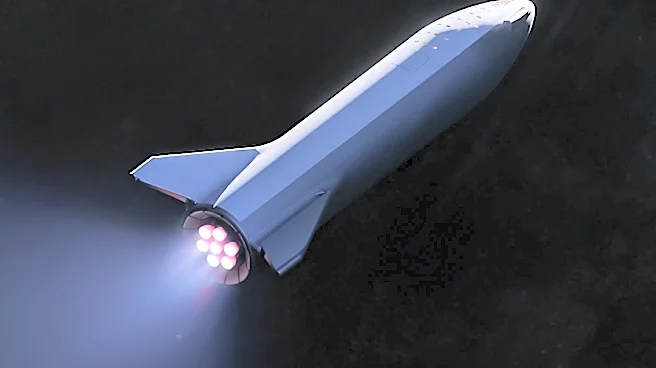
NASA is continuing its efforts to locate the crash site using its Lunar Reconnaissance Orbiter, although capturing images depends on various factors such as lighting and spacecraft position. The data collected from this event will contribute to a better understanding of artificial impacts and their implications for future lunar exploration. SpaceX, in collaboration with NASA, is working on developing reusable rocket stages, such as the Starship, to minimize space debris and enhance space safety. This incident may also lead to increased scrutiny and regulatory measures regarding space debris management.