







What's Happening?
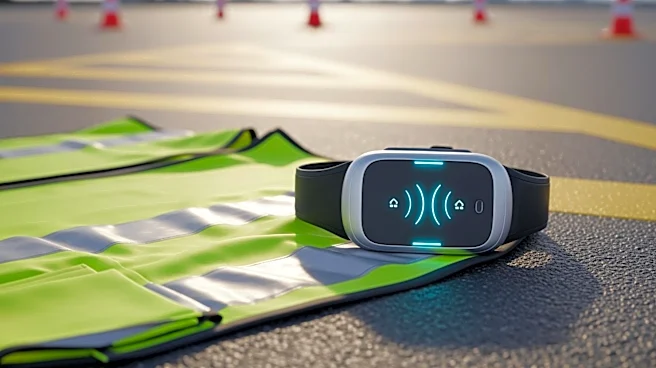
In Maryland, a new pilot project is testing wearable technology designed to improve safety for highway work crews. The initiative, a collaboration between Morgan State University, the city of Baltimore, and the Maryland Department of Transportation, utilizes
lidar sensors, edge computing, and predictive algorithms to alert workers of potential hazards. The system provides multi-sensory warnings through flashing beacons, haptic feedback, and sirens. The project aims to reduce accidents and enhance safety in work zones, where workers are vulnerable to traffic-related incidents.
Why It's Important?
The implementation of wearable technology in highway work zones represents a significant advancement in occupational safety. By providing real-time alerts, the system can help prevent accidents and protect workers from harm. This initiative addresses a critical need for improved safety measures in construction and maintenance environments, where workers face significant risks. The success of this project could lead to broader adoption of similar technologies across the U.S., potentially reducing work zone fatalities and injuries. It also highlights the role of innovation in enhancing public safety and supporting infrastructure development.
What's Next?
Following the pilot project's completion, further testing and evaluation will determine the system's effectiveness and potential for wider deployment. The collaboration between public and private sectors may expand to include additional partners and funding sources. As the technology proves successful, other states may consider implementing similar systems to enhance work zone safety. The project also aligns with national efforts to improve infrastructure and transportation safety, contributing to broader goals of reducing traffic-related incidents and enhancing public safety.