






What's Happening?
A Miami-Dade Circuit Court judge has dismissed a legal challenge aimed at preventing a November referendum concerning the proposed redevelopment of the Rickenbacker and Marine Stadium marinas on Virginia Key. This ruling allows City of Miami voters to
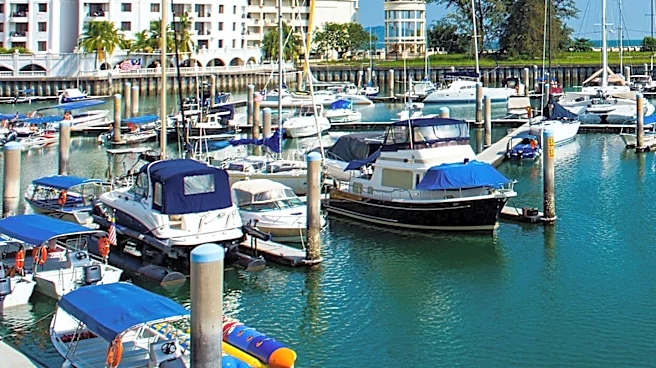
decide on a proposed lease agreement for approximately 27.62 acres of city-owned waterfront property. Virginia Key, LLC, a joint venture between RCI Group and Suntex Marinas, plans to invest around $80 million in private funding for improvements. The redevelopment project includes boat storage, restaurants, retail spaces, and public parking. The proposed lease is for an initial 45-year term with two 15-year renewal options, stipulating a minimum annual guaranteed rent of $2.2 million, with escalations, totaling approximately $203.98 million over the initial term, plus six percent of gross revenues. The lawsuit, filed by Rickenbacker Marina, Inc., its affiliate Biscayne Marine Partners, LLC, and Adam Gersten, challenged the referendum's legality, including claims of misleading ballot language and issues with fair market value appraisals.
Why It's Important?
This court decision is significant for the City of Miami as it empowers voters to directly influence the future of a substantial waterfront property. The proposed $80 million privately funded redevelopment could bring considerable economic benefits, including new jobs and increased revenue for the city, as highlighted by David Filler of Suntex Marinas. The current operator, Rickenbacker Marina, Inc., has been operating under an expired ground lease since 2016, and the legal battle has spanned nearly a decade, hindering significant reinvestment in the marina. The outcome of the referendum will determine whether the city moves forward with a long-term lease that could transform the area into a world-class marina and public space. Robert W. Christoph Jr., president of RCI Group, emphasized that the ruling ensures Miami residents have the opportunity to decide the future of property that belongs to them, rather than allowing the status quo to persist for the benefit of the current operator.
What's Next?
The referendum is scheduled for November 3, where City of Miami voters will cast their ballots on whether to approve the lease of the Virginia Key property to Virginia Key, LLC under the outlined financial and redevelopment terms. The court's decision does not endorse the proposed lease or redevelopment itself but rather confirms the voters' right to make that determination. Should the referendum pass, Virginia Key, LLC will proceed with the privately funded $80 million improvements, which are expected to generate hundreds of new jobs and millions in revenue for the city. Conversely, a rejection of the referendum would likely necessitate a re-evaluation of the property's future and potentially lead to new proposals or continued legal disputes regarding its management and development.
Beyond the Headlines
The ongoing dispute and the upcoming referendum highlight broader issues concerning public land use, private development, and community involvement in urban planning. The case underscores the tension between long-standing operators and new development proposals, particularly in prime waterfront locations. It also brings to light the complexities of public-private partnerships, where significant private investment is contingent on public approval and favorable lease terms. The emphasis on creating a 'public space open and welcoming to all residents of Miami' suggests a focus on equitable access and community benefit, which are increasingly important considerations in urban development projects. The outcome will set a precedent for how similar large-scale public land redevelopments are handled in Miami and potentially other U.S. cities, balancing economic growth with public interest and environmental concerns.