

What's Happening?
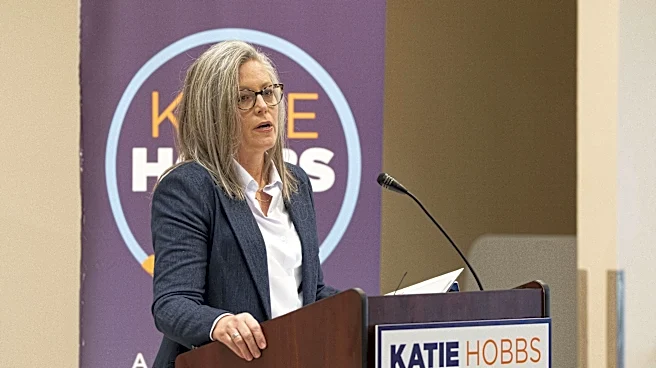
Virginia Governor Abigail Spanberger announced that the Commonwealth of Virginia has submitted a proposal to NASA to establish the United States Space Academy in Hampton, Virginia. The proposal has garnered full support from Virginia's congressional delegation,
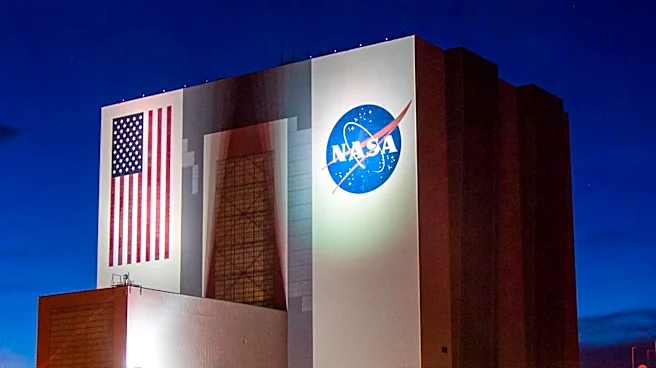
including Senators Mark Warner and Tim Kaine, and Representatives such as John McGuire. The proposed academy would be anchored by Fort Monroe and NASA Langley Research Center, with plans to accommodate over 300 cadets. Virginia aims to leverage its existing aerospace infrastructure, including NASA Langley and Wallops Flight Facility, along with its higher education system, to meet the federal government's goal of training the first class of cadets by 2028. Secretary of Commerce and Trade Carrie Chenery emphasized the plan to utilize existing facilities and a network of industry, research, and academic leaders to rapidly scale the academy.
Why It's Important?
Establishing the United States Space Academy in Virginia would significantly bolster the state's role as a leader in aerospace innovation and national defense. This initiative would create new educational and training opportunities, fostering the next generation of scientists, engineers, and space explorers. For Virginia, it means further solidifying its position as a hub for space exploration, leveraging its strong concentration of military and intelligence community assets, robust aerospace industry, and top-tier higher education system. The academy would attract talent and investment, contributing to economic growth and technological advancement within the state. For the nation, it represents a strategic investment in maintaining dominance in space, which is critical for national security and economic prosperity, as highlighted by Senator Tim Kaine.
What's Next?
The proposal will now be reviewed by NASA, which will assess Virginia's plan against its requirements for establishing the United States Space Academy. Virginia officials, including Governor Spanberger and the congressional delegation, will continue to work with federal partners to advocate for Hampton as the chosen site. If selected, the next steps would involve detailed planning for the adaptive reuse of existing facilities at NASA Langley and Fort Monroe, curriculum development, and the establishment of partnerships with industry and academic institutions. The goal is to begin training the first class of cadets by 2028, indicating a relatively swift timeline for implementation should Virginia's proposal be accepted.
Beyond the Headlines
The establishment of a United States Space Academy in Virginia could have profound long-term implications beyond just space education. It could foster a deeper integration between military, intelligence, and civilian space efforts, given Virginia's existing defense footprint. This convergence could lead to accelerated innovation in dual-use technologies, benefiting both national security and commercial space sectors. Furthermore, the academy could inspire a new generation of STEM professionals, addressing potential workforce shortages in critical scientific and engineering fields. The emphasis on leveraging existing infrastructure also highlights a strategic approach to federal investment, aiming for efficiency and rapid deployment by building upon established capabilities rather than starting from scratch.