







What's Happening?
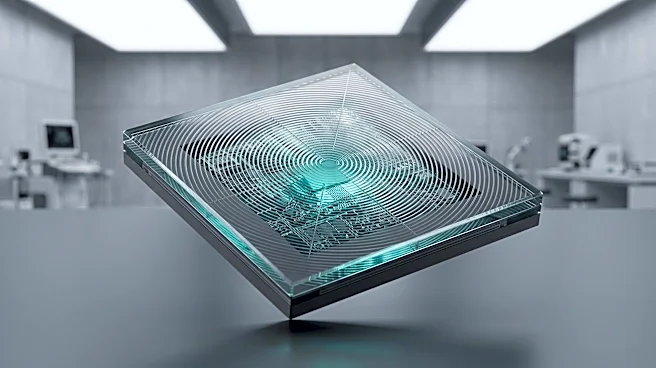
Bridge Neurotech, a company focused on non-invasive brain-computer interfaces (BCIs), has announced a research and development agreement with Butterfly Network, Inc. Butterfly Network is known for its proprietary Ultrasound-on-Chip™ semiconductor technology.
This partnership aims to develop a fully non-invasive BCI by leveraging Butterfly's ultrasound technology to enable real-time brain imaging and interaction without the need for surgery or implants. Bridge Neurotech, which recently emerged from stealth mode, believes that advancements in neuroscience, semiconductors, and artificial intelligence have created an opportunity to use ultrasound to image and decode brain activity through the skull. The multi-year agreement includes payments to Butterfly for technology access and development milestones, as well as commitments to purchase Butterfly hardware. Bridge Neurotech has also initiated its first human research study and is currently enrolling participants in Redwood City, California.
Why It's Important?
This collaboration signifies a significant step towards making brain-computer interface technology more accessible and less invasive. Current BCI technologies often require surgical implantation, which carries inherent risks and limits widespread adoption. A fully non-invasive approach, as pursued by Bridge Neurotech and Butterfly Network, could revolutionize the treatment of various neurological conditions and expand human capabilities without the need for surgical procedures. The potential impact on healthcare is substantial, offering new avenues for restoring function in individuals with disabilities and potentially enhancing cognitive abilities. For Butterfly Network, this partnership validates the versatility and potential of its Ultrasound-on-Chip™ technology beyond its current applications in point-of-care ultrasound. The development of such technology could also attract further investment and innovation in the BCI sector, potentially creating new markets and economic opportunities within the medical technology industry.
What's Next?
Bridge Neurotech will continue its human research study in Redwood City, California, enrolling participants to further explore the capabilities of its non-invasive BCI platform. The company will license Butterfly's Ultrasound-on-Chip™ technology, and the multi-year agreement outlines payments for technology access and development milestones, alongside commitments for hardware purchases. This suggests a phased approach to development, with ongoing research and testing to refine the technology. Success in these early stages could lead to further clinical trials and eventual regulatory approval for medical applications. The partnership may also encourage other companies to explore non-invasive BCI solutions, potentially accelerating the development of this field. Future developments will likely focus on improving the precision and reliability of ultrasound-based brain imaging and decoding, as well as expanding the range of applications for this technology.
Beyond the Headlines
The pursuit of non-invasive BCIs raises profound ethical and societal questions. While the immediate focus is on medical applications, the long-term implications of expanding human capabilities through brain-computer interfaces are vast and complex. Issues such as data privacy, the potential for misuse, and the equitable distribution of such advanced technologies will need careful consideration as the technology progresses. The ability to image and decode brain activity without physical intervention could also lead to new understandings of the human brain, impacting fields beyond medicine, such as psychology, education, and even artificial intelligence. The development of accessible BCIs could challenge existing notions of human identity and interaction, prompting discussions about the boundaries between human and machine, and the future of human evolution.