








What's Happening?
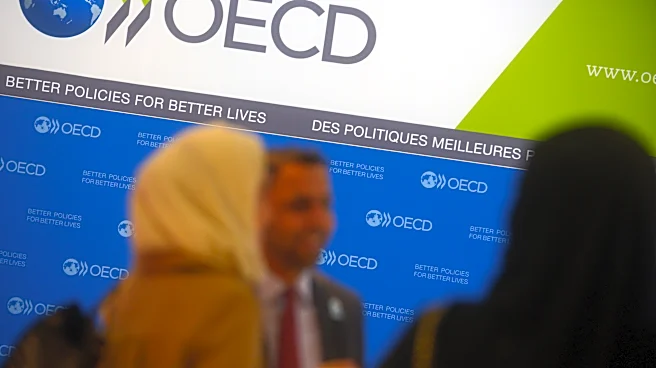
Indonesia is actively revising its business competition rules as part of a broader effort to meet the stringent standards required for membership in the Organization for Economic Co-operation and Development (OECD). Jakarta aims to complete key regulatory
reforms by 2028, with revisions to its decades-old competition law being a top priority. Chief Economic Affairs Minister Airlangga Hartarto indicated that these revisions would likely focus on aspects such as merger and acquisition notifications. Under current regulations, companies must notify the KPPU (Indonesia's anti-monopoly watchdog) within 30 business days of such acquisitions. A recent example includes a Rp 15 billion (approximately $824,000) fine imposed on TikTok for late reporting of its takeover of e-commerce platform Tokopedia. The OECD has assigned a 'competition committee' to review Indonesia's progress, assessing whether Jakarta has established appropriate legal provisions, sanctions, procedures, policies, and institutions in its competition law enforcement. Minister Hartarto stated that Indonesia has already complied with at least 80% of OECD standards, but significant regulatory homework remains, particularly revising the 1999 law on banning monopolistic practices and unfair business competition, which he described as 'archaic'.
Why It's Important?
Indonesia's pursuit of OECD membership and its overhaul of competition law carry significant implications for its economy and international standing. Joining the OECD, often referred to as a 'club of rich countries,' signals a commitment to high standards of governance, economic policy, and market openness. This move could enhance investor confidence, attract more foreign direct investment, and integrate Indonesia more deeply into the global economy. The revision of competition law is crucial for fostering a fair and competitive business environment, which benefits consumers through lower prices and better quality goods and services, and encourages innovation among businesses. Stronger competition laws can also prevent the formation of monopolies and cartels, ensuring that economic power is not concentrated in a few hands. For international businesses operating in or looking to enter Indonesia, these reforms will provide greater clarity and predictability in the regulatory landscape, potentially reducing compliance risks and operational uncertainties. The process also highlights the challenges developing economies face in aligning their domestic regulations with international best practices.
What's Next?
Indonesia is pushing to finalize the necessary regulatory changes by next year, with the goal of completing all key reforms by its self-imposed 2028 deadline for OECD membership. The revisions to the 1999 law on monopolistic practices and unfair business competition will be a central focus, with the KPPU actively proposing amendments and lawmakers seeking to expedite the process. The OECD's competition committee will continue its review, scrutinizing Indonesia's legal provisions, sanctions, procedures, policies, and institutions related to competition law enforcement. Successful completion of these reforms will be critical for Indonesia to gain full OECD membership. This process will likely involve ongoing dialogue and collaboration between Indonesian authorities and OECD experts to ensure that the revised laws meet international benchmarks. The outcome will not only determine Indonesia's status within the OECD but also shape its future economic trajectory and its attractiveness as a destination for global business and investment.
Beyond the Headlines
Indonesia's drive to overhaul its competition law and join the OECD reflects a broader strategic ambition to elevate its economic governance and integrate more fully into the global economic order. This move is not merely about adopting new rules but about fundamentally shifting the country's approach to market regulation and economic policy. The description of the current law as 'archaic' suggests a recognition that existing frameworks are inadequate for the complexities of a modern, digital economy. The process of aligning with OECD standards could also lead to a more transparent and accountable government, as the organization emphasizes good governance and anti-corruption measures. Furthermore, the experience of revising such fundamental laws could serve as a model for other developing nations seeking to enhance their economic competitiveness and attract international investment. The long-term implications include a potential strengthening of democratic institutions and a more robust rule of law, which are foundational for sustainable economic development.