





What's Happening?
The Swedish Coast Guard and Police are once again deployed to Lampedusa, Italy, to monitor the EU's external border in the central Mediterranean as part of Frontex Operation Italy. This assignment, which began on September 30 and will run until April
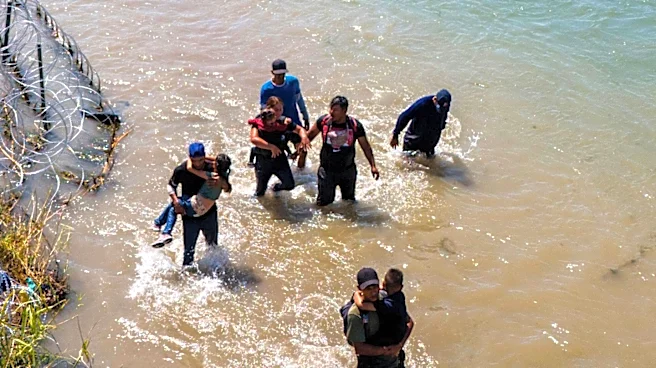
14, 2027, involves two identical rigid inflatable boats and a total of nineteen personnel from the Swedish Coast Guard and nine from the Swedish Police Authority. Their duties include border surveillance, search and rescue operations, escorting migrants ashore, and preventing drug smuggling and illegal fishing. Daniel Björklind, Head of Field Officer on Lampedusa for the Swedish Coast Guard, noted that they frequently encounter migrants in various types of boats, often worn out and emaciated from their journey, and assist them to safe harbor on Lampedusa where they receive care and registration. Frontex data indicates a significant decrease in migrant arrivals in the central Mediterranean, with approximately 22,500 registered from January to September 2026, a 56% reduction compared to the same period in 2025. Libya remains the primary departure point for migrants in this region, followed by Tunisia and Algeria. Despite the decrease in arrivals, the UN's International Organization for Migration (IOM) reports an increase in fatalities, with at least 996 people dying or going missing on this route between January 1 and September 15, 2026, up from 844 in the same period last year.
Why It's Important?
This deployment highlights the ongoing international efforts to manage migration flows and secure borders, particularly in critical areas like the central Mediterranean. The involvement of Swedish authorities, under the Schengen agreement, underscores the shared responsibility among EU member states to contribute resources to external border control. The reported sharp decline in migrant arrivals could indicate the effectiveness of current border control strategies or shifts in migration patterns, which has implications for resource allocation and policy development within the EU. However, the concurrent increase in migrant deaths despite fewer crossings points to the persistent dangers of these journeys and the urgent need for safer pathways or more robust rescue operations. This situation impacts humanitarian organizations, border agencies, and the political discourse surrounding migration in Europe, influencing public opinion and policy decisions regarding asylum and immigration. The data on departure points also emphasizes the geopolitical factors and instability in North African countries that continue to drive migration.
What's Next?
The Swedish operation will continue until April 2027, suggesting a sustained commitment to border surveillance in the Mediterranean. Future developments will likely involve continued monitoring of migrant arrival numbers and fatality rates, which could influence the scale and nature of Frontex operations. The EU may reassess its strategies for managing external borders and addressing the root causes of migration, potentially leading to new agreements with North African countries or adjustments in search and rescue protocols. The ongoing humanitarian crisis, marked by increasing deaths, will likely prompt calls for enhanced international cooperation and humanitarian aid to ensure the safety and well-being of migrants. Discussions within the EU will continue regarding burden-sharing among member states for managing migrant flows and supporting frontline countries like Italy. The long-term effectiveness of these border control measures will be evaluated based on their ability to reduce irregular migration while upholding humanitarian principles.
Beyond the Headlines
The situation in the central Mediterranean reflects a complex interplay of geopolitical instability, economic disparities, and human rights concerns. The decrease in overall migrant arrivals, juxtaposed with an increase in fatalities, suggests that journeys are becoming more perilous, possibly due to stricter border controls pushing migrants towards more dangerous routes or less seaworthy vessels. This raises ethical questions about the balance between border security and the humanitarian imperative to save lives. The reliance on countries like Libya, Tunisia, and Algeria as departure points highlights the broader challenges of regional stability and the effectiveness of international partnerships in addressing migration at its source. The involvement of national coast guards and police in Frontex operations also underscores the militarization of border control, which can have implications for the treatment of migrants and asylum seekers. The long-term societal impact includes the integration challenges for those who successfully reach Europe and the ongoing debate about the moral obligations of wealthier nations towards displaced populations.