
What's Happening?
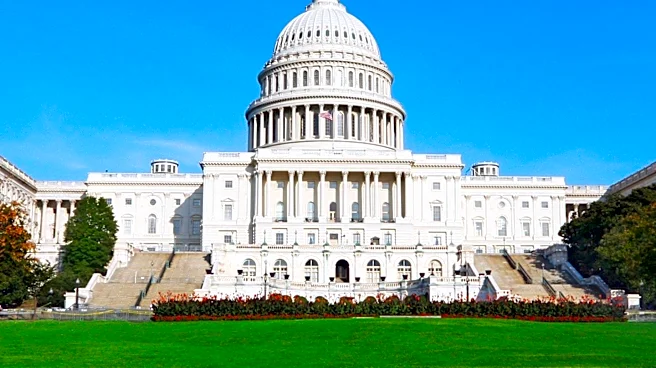
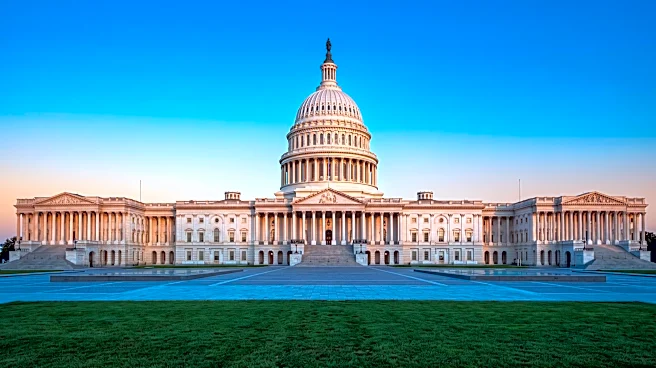
U.S. Representative Lauren Boebert has made headlines for suggesting that Democrats might have had 'liquid courage' during a late-night House session. According to TMZ, Boebert spoke outside the Capitol
on Tuesday night, implying that Democrats were unusually rowdy. She noted that while her Freedom Caucus group is typically the most boisterous, the opposition party was noticeably louder than usual during the recent late-night votes. Boebert, known for her hard-right political style and controversial remarks, did not explicitly claim that Democrats were under the influence of alcohol, but her comments and expressions conveyed the suggestion. This incident follows a pattern of Boebert making pointed statements without direct accusations, similar to a November 2021 elevator incident involving Representative Ilhan Omar.
Why It's Important?
This incident highlights the ongoing partisan tensions and confrontational political discourse prevalent in the U.S. Congress. Representative Boebert's remarks, even if not direct accusations, contribute to a climate of distrust and animosity between political parties. Such public statements can further polarize the political landscape, making bipartisan cooperation more challenging. The focus on personal conduct and speculative accusations, rather than substantive policy debates, can distract from critical legislative work and erode public confidence in government institutions. For the public, these types of exchanges can reinforce negative perceptions of politicians and the legislative process, potentially leading to disengagement or increased cynicism about political efficacy.
What's Next?
While Representative Boebert's comments are unlikely to lead to formal disciplinary action, they may fuel further public debate and media scrutiny regarding decorum in Congress. Other lawmakers might respond to her remarks, either in support or condemnation, potentially escalating the verbal sparring. This incident could also be used by political opponents in future campaigns to portray a certain image of the representative or her party. The broader implication is a continued focus on the personal and performative aspects of politics, rather than policy, which could influence how legislative sessions are perceived and reported in the media.
Beyond the Headlines
The underlying dynamic at play is the increasing use of rhetoric that questions the integrity and professionalism of political opponents. This trend can normalize a confrontational style of politics where insinuations and veiled accusations become common tools. Such an environment can make it difficult to address complex national issues, as the focus shifts from problem-solving to partisan point-scoring. Ethically, it raises questions about the responsibility of elected officials to maintain a respectful and productive working environment, even amidst strong disagreements. Culturally, it reflects a broader societal trend where public figures often engage in provocative language, blurring the lines between political commentary and personal attacks.