





What's Happening?
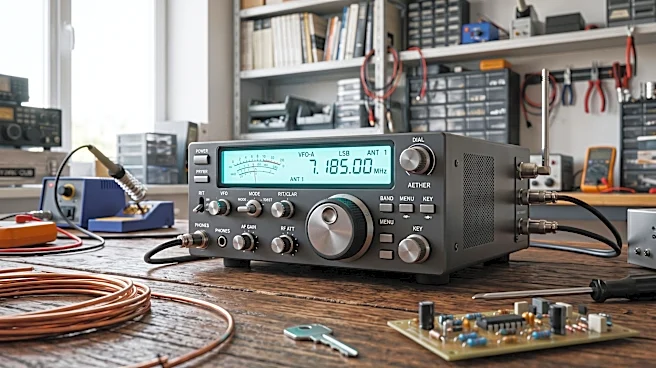
The Schaumburg Amateur Radio Club (SARC) has released a practical operating guide detailing various ham radio operating modes. This guide aims to assist both new and experienced amateur radio operators in understanding and utilizing different communication
methods. Ham radio operation is categorized into three layers: communication family (e.g., voice, CW, data), specific mode or protocol (e.g., FM, SSB, FT8), and system, path, or activity (e.g., repeaters, satellites, contesting). The Federal Communications Commission (FCC) defines emission categories such as CW, data, image, phone, and radioteletype (RTTY), with authorized emissions depending on the band, segment, and operator privileges. The guide encourages new operators to start by listening to local conversations and gradually build their skills in modes like voice, Morse code (CW), and various digital data methods such as FT8, RTTY, and PSK31. It also covers image modes like SSTV and ATV, weak-signal operation, and satellite communication, emphasizing the importance of checking FCC rules and band plans before transmitting.
Why It's Important?
This comprehensive guide from SARC is important for the amateur radio community in the U.S. as it demystifies the complex world of ham radio operating modes, making it more accessible to a wider audience. By providing clear distinctions between communication families, specific protocols, and activities, it helps operators choose the most suitable mode for their interests and skill levels. This clarity can lead to increased participation and engagement in amateur radio, fostering a more robust and skilled community. Furthermore, the emphasis on adhering to FCC rules and band plans promotes responsible and efficient use of the radio spectrum, which is crucial for maintaining order and preventing interference in shared frequencies. For emergency communication and public service nets, a well-informed and active ham radio community is vital, as these operators often provide critical communication links during disasters when conventional systems fail. The guide's focus on practical steps, such as listening first and gradually building skills, ensures that new operators are well-prepared, enhancing the overall quality and safety of amateur radio operations.
What's Next?
The SARC guide suggests several next steps for amateur radio enthusiasts. New operators are encouraged to choose one specific goal, such as listening to a net or decoding FT8 signals, and then confirm their license privileges and operating segments before transmitting. The guide also advises preparing the correct station path, which may involve specific equipment like microphones, keys, or computer interfaces, depending on the chosen mode. A crucial step is to listen and test equipment before transmitting to understand the operating procedures and ensure a clean signal. Operators are reminded to use appropriate audio drive, power, and filters to comply with FCC requirements regarding bandwidth and emission products. After making a contact, logging the details and reviewing the experience is recommended for continuous improvement. SARC members are encouraged to share their knowledge and experiences, fostering a collaborative learning environment. The club also offers related digital-mode guides, such as 'Install & Setup FT8' and 'Digital-Mode WSJT-X 3.0 vs. DECODIUM 4.0 “Shannon,”' to further assist operators in building and optimizing their digital stations.
Beyond the Headlines
The detailed guidance provided by SARC on ham radio operating modes extends beyond mere technical instructions; it highlights the enduring relevance and adaptability of amateur radio in the digital age. While traditional modes like Morse code (CW) remain fundamental, the guide's extensive coverage of digital data modes like FT8 and image modes such as SSTV underscores the continuous evolution of ham radio. This blend of old and new technologies allows amateur radio to serve diverse purposes, from casual communication and technical experimentation to critical emergency response. The emphasis on community and shared learning within SARC reflects the collaborative spirit inherent in amateur radio, where experienced operators mentor newcomers and collectively advance the hobby. This community aspect is vital for knowledge transfer and innovation, ensuring that the skills and infrastructure of amateur radio remain robust. Moreover, the guide implicitly promotes a culture of self-reliance and technical proficiency, as operators are encouraged to understand their equipment, adhere to regulations, and troubleshoot issues independently. This fosters a unique blend of technical expertise and social engagement, making ham radio a dynamic and valuable pursuit.