



What's Happening?
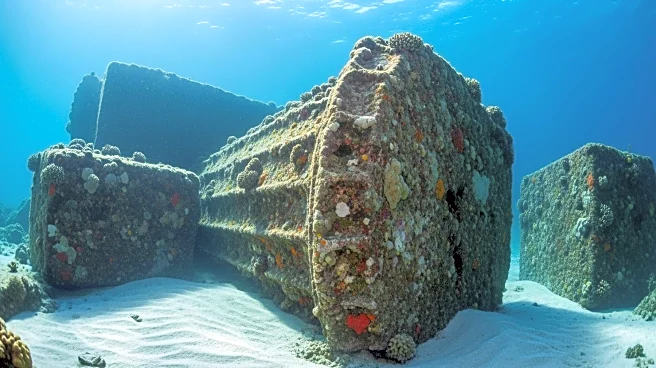
Archaeologists have discovered 22 monumental stone blocks from the ancient Lighthouse of Alexandria, submerged off Egypt's coast for over 600 years. These blocks, weighing between 70 and 80 tons, are believed to have formed the lighthouse's entrance.
The discovery is part of the PHAROS Project, a collaboration aimed at creating a digital twin of the lighthouse. The lighthouse, one of the seven wonders of the ancient world, was destroyed by earthquakes in the 13th and 14th centuries.
Why It's Important?
The discovery of the Lighthouse of Alexandria's remains is crucial for historical and archaeological research. It provides insights into ancient engineering and architectural techniques, blending Egyptian and Greek styles. This finding contributes to the preservation of cultural heritage and enhances our understanding of ancient civilizations. The digital reconstruction efforts will allow people worldwide to appreciate this historical wonder, fostering global cultural appreciation and education.
What's Next?
The PHAROS Project will continue to digitally map and reconstruct the Lighthouse of Alexandria. This involves using advanced imaging technologies and collaborating with experts across various fields. The project's success could lead to similar initiatives for other lost historical structures, promoting the preservation and study of ancient history. The digital twin of the lighthouse will serve as an educational tool and a testament to human ingenuity.