
What's Happening?
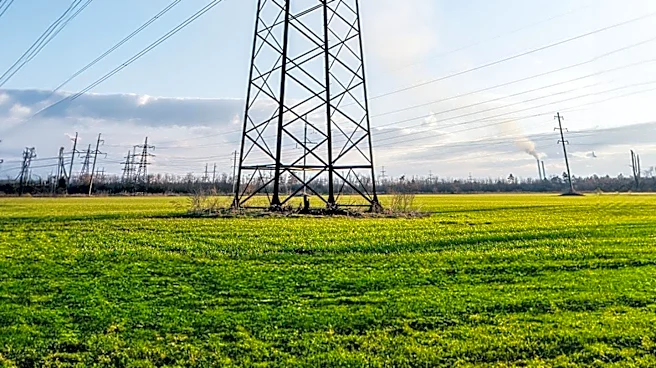
A 25-mile, 345 kV transmission line is slated for construction in eastern Henderson County, extending from the Reid substation in Webster County to a substation in Warrick County, Indiana. This project,
named RIKY (Reid to the Indiana Kentucky border), is being managed by LS Power, a subsidiary of Republic Transmission, which secured the bid from Big Rivers. The initiative stems from a 2022 analysis by the Midcontinent Independent System Operator (MISO) that identified a need for improved system durability, reliability, and congestion relief in the area. Michael Bruno, project manager with LS Power, stated that MISO regularly assesses its system for necessary improvements, and this project was among those prioritized in 2024. Big Rivers also advocated for these upgrades. The project aims to facilitate a smoother transfer of electricity and prepare for future demands on the infrastructure. Republic Transmission won the bid with an $88 million cost containment analysis, meaning Big Rivers is responsible for payments up to that amount, with Republic covering costs beyond it. Construction is projected to begin in 2028, with the line expected to be in service by 2030.
Why It's Important?
This transmission line project is crucial for enhancing the energy infrastructure in the U.S. Midwest, particularly in Henderson County and southern Indiana. By improving system durability and reliability, it addresses the growing demand for electricity and ensures a more stable power supply for residents and industries. The project's focus on congestion relief is vital, as it will create an additional pathway for electricity flow, akin to a 'little highway,' preventing bottlenecks and ensuring efficient distribution. This is especially important for power-intensive industries in Henderson County, as highlighted by Stephanie McCombs, manager of member and corporate communications for Big Rivers. A robust grid connection is essential for economic development and maintaining the operational capacity of these industries. While the project is regional and not tied to a specific energy type, its completion will strengthen the overall grid, making it more resilient to future energy demands and potential disruptions. The investment in such infrastructure underscores a proactive approach to energy security and economic stability in the region.
What's Next?
Currently, there are three proposed routes for the transmission line, with one being the preferred option. Project officials plan to work closely with landowners along the route to determine the final path and secure easements. Landowners whose properties are part of the potential path have received letters, and public information sessions are scheduled for November 17 and 18 to address concerns and gather feedback. While officials aim to place poles on ditch banks and property lines rather than in the middle of fields, farmers like Robbie Williams and Bob McIndoo have expressed significant concerns about the impact on agricultural productivity, particularly regarding the navigation of large machinery and potential soil damage. Landowners will be compensated based on land appraisals. Construction is targeted to commence in 2028, with the transmission line expected to be operational by 2030. The project is distinct from previous energy battles in the county, such as wind farm proposals, and is not connected to data center developments, according to project officials.
Beyond the Headlines
The planned transmission line project in Henderson County highlights a recurring tension between infrastructure development and local community interests, particularly those of agricultural landowners. The concerns raised by farmers regarding the placement of poles in fields underscore the practical challenges and economic impacts on their operations, including difficulties with wide machinery, GPS guidance, and potential long-term soil damage. This situation brings to light the broader issue of eminent domain and how utility companies balance the public good of improved energy infrastructure with private property rights and agricultural viability. The project's regional scope, intended to benefit a wider area beyond Henderson County, also raises questions about equitable distribution of benefits and burdens. The emphasis on working with landowners and holding public information sessions suggests an attempt to mitigate these conflicts, but the fundamental challenge of integrating large-scale infrastructure into existing land use patterns remains. This scenario is a microcosm of similar debates across the U.S., where the push for modernizing and expanding the energy grid often intersects with local land use, environmental concerns, and community resistance.