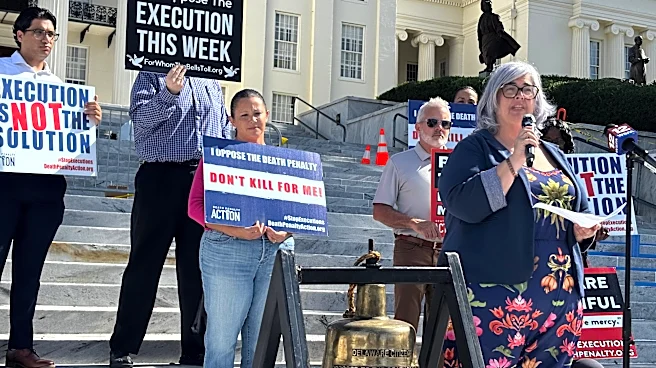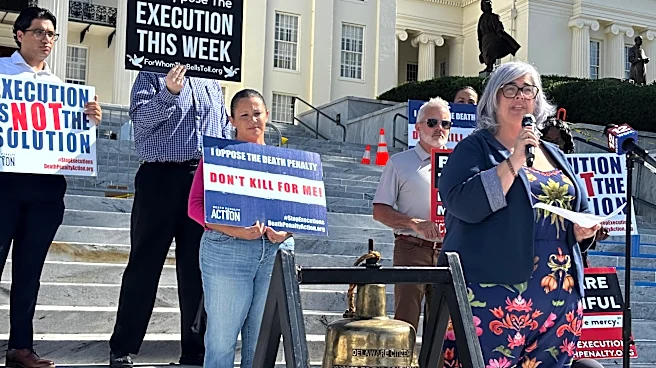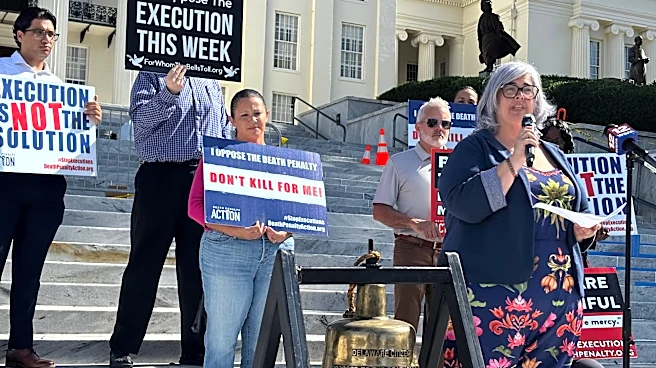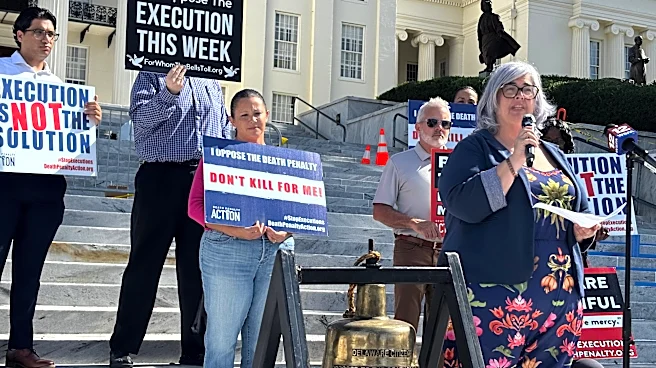







What's Happening?
California Governor Gavin Newsom has commuted the death sentences of 548 inmates, effectively clearing the state's death row for the first time since the late 19th century. This monumental decision impacts over a quarter of the nation's condemned inmates.
Among those receiving reprieves are individuals convicted of murders in Richmond, including Nathan Burris, who killed Deborah Ross and Ersie Everette in 2009; Willie Darnell Johnson, convicted of murdering Willie Womble in 1986; and Michael Nevail Pearson, who murdered coworkers Ruth Talley and Barbara Garcia in 1995. The decision also includes John Sapp, convicted of murdering Richmond resident Elizabeth Duarte. Governor Newsom, who issued a moratorium on executions in 2019, stated that state-sanctioned killing is incompatible with California's values and undermines the legal system.
Why It's Important?
Governor Newsom's mass commutation is a landmark decision in the history of capital punishment in the U.S., significantly altering California's criminal justice landscape. This move reflects a strong stance against the death penalty, aligning with a growing national debate on its morality and effectiveness. For the affected inmates, it means a change from death row to life imprisonment, though many will remain incarcerated for life. For victims' families, this decision can be deeply painful, reigniting grief and raising questions about justice. The action also positions California as a leader in progressive criminal justice reform, potentially influencing other states to reconsider their capital punishment policies. It highlights the tension between public opinion, which previously rejected abolishing the death penalty, and the governor's executive power.
What's Next?
Many of Governor Newsom's commutation decisions, particularly for those convicted of multiple felonies, will require approval from four of seven judges on the California Supreme Court. This legal review will be a critical next step in solidifying the commutations. Opponents of the decision, such as Anne Marie Schubert of the Criminal Justice Legal Foundation, have pledged to challenge the commutations in the state Supreme Court, citing concerns about victims' rights and the overturning of jury decisions. The commutations will also prevent these inmates from being eligible for new Board of Parole Hearings commutation and resentencing regulations, ensuring they will die in prison but not by execution. This decision is expected to continue to generate significant debate and legal challenges.
Beyond the Headlines
Governor Newsom's decision to commute death sentences carries profound ethical, legal, and cultural implications. Ethically, it reasserts the state's stance against capital punishment, framing it as incompatible with modern societal values. Legally, it challenges the traditional role of the death penalty within the justice system and could spark further legal battles over executive clemency powers versus judicial and voter mandates. Culturally, it reflects a broader societal shift in how crime and punishment are viewed, moving towards rehabilitation and away from retribution. This action could also influence the national conversation on criminal justice reform, potentially inspiring other states to re-evaluate their death penalty statutes and practices, and further solidifying California's role as a progressive policy innovator.