






What's Happening?
Russia has enacted Presidential Decree No. 686, signed on September 28, which classifies commercial records related to its energy exports. This decree restricts the disclosure of information concerning the fuel and energy sector, including names, quantities,
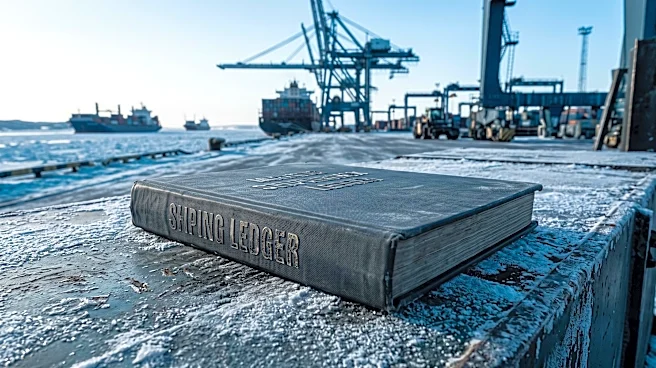
and prices of export cargoes, as well as details about sellers, buyers, carriers, payment arrangements, shipping routes, and timing of cargo operations. The dissemination of this information through mass media and the internet is now restricted. This move coincides with a significant increase in traffic along Russia's Arctic shipping corridor, known as the Northern Sea Route (NSR). In 2026, the NSR has seen a record 104 confirmed transit voyages by September 30, surpassing the 103 voyages recorded for all of 2025. Estimated transit cargo has reached 3.7 million tonnes, a 15% increase from the previous year. This decree follows a trend of increasing opacity, as Rosatomflot, the NSR administrator, ceased publishing daily shipping logs and permit data last year.
Why It's Important?
This decree significantly complicates efforts by Western governments and independent analysts to verify Russian energy export activities, particularly in the context of international sanctions. By classifying commercial records, Russia is making it harder to link observed ship movements to specific cargoes, buyers, insurers, and payments, which are crucial for enforcing sanctions. This shift places a greater burden on external entities to gather and interpret data from satellite imagery, AIS histories, and port observations. For countries like Norway, which is on the front line of this increased Arctic traffic, the situation raises concerns about maritime safety and environmental risks. The presence of an estimated 900 to 1,500 'shadow fleet' vessels, often older and inadequately insured, combined with less transparent information about their cargo, increases the potential for accidents and complicates emergency response in sensitive Arctic waters.
What's Next?
The immediate consequence will be an increased reliance on advanced surveillance technologies, such as space-based sensors and uncrewed maritime systems, by Western nations and independent organizations to monitor Russian energy exports. Analysts will need to develop more sophisticated methods to infer cargo details and financial transactions without access to official Russian commercial records. This could lead to a more challenging environment for sanctions enforcement and intelligence gathering. Furthermore, the increased traffic of potentially less regulated vessels in the Arctic could prompt calls for enhanced international maritime safety protocols and environmental monitoring in the region. The decree may also spur further development of 'dark fleet' tactics, where vessels use multiple AIS transponders and modified firmware to disguise their identity and position, making tracking even more difficult.
Beyond the Headlines
The decree represents a strategic move by Russia to shield its energy sector from external scrutiny, reflecting a broader geopolitical trend towards opacity in critical economic activities. This could set a precedent for other nations seeking to circumvent international oversight or sanctions. The increased reliance on independent verification methods highlights a growing technological arms race in intelligence and surveillance, where satellite imagery and cyber capabilities become paramount. Ethically, the lack of transparency raises questions about accountability for potential environmental damage or maritime incidents in the Arctic, a region already vulnerable to climate change. The long-term implications could include a more fragmented global shipping information landscape, where official data becomes less reliable, forcing a paradigm shift in how international trade and compliance are monitored and enforced.