





What's Happening?
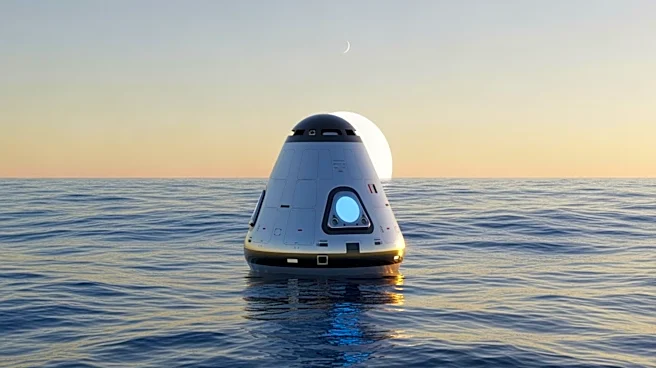
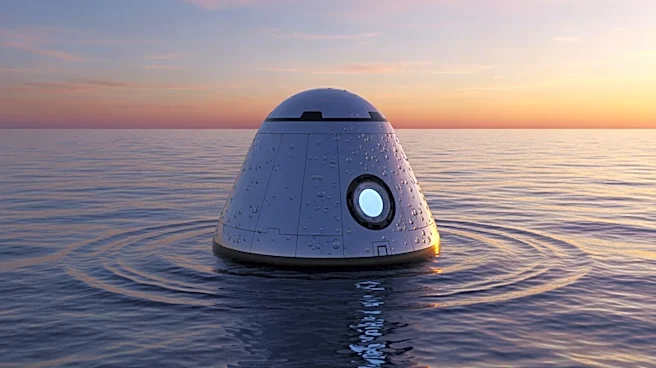
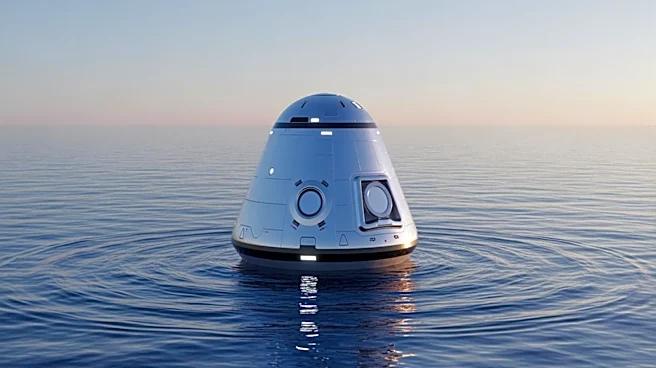
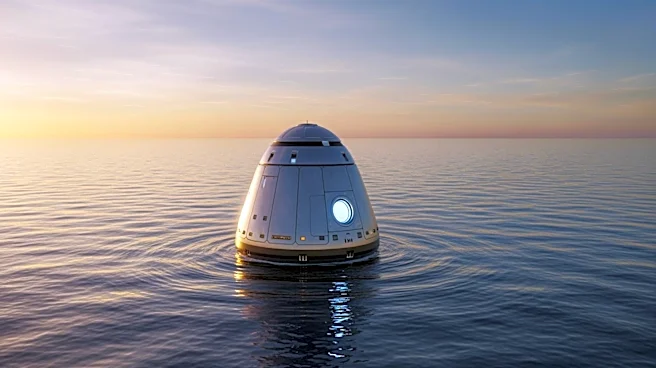
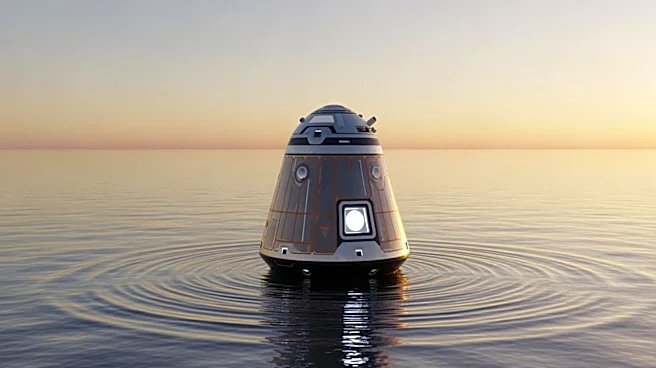
NASA's Orion spacecraft, carrying the Artemis II crew, successfully landed in the Pacific Ocean off the coast of California on April 10, 2026. The crew included NASA astronauts Reid Wiseman, Victor Glover, Christina Koch, and Canadian Space Agency astronaut Jeremy
Hansen. The spacecraft's return marks a significant milestone in NASA's Artemis program, which aims to return humans to the Moon. Recovery teams, including U.S. Navy divers, were deployed to secure the spacecraft and transfer the crew to the USS John P. Murtha. The mission's successful completion is a testament to international collaboration and technological advancements in space exploration.
Why It's Important?
The successful return of Artemis II is crucial for NASA's ongoing efforts to advance human space exploration. It demonstrates the reliability of the Orion spacecraft and the effectiveness of international partnerships, particularly with the Canadian Space Agency. The mission's success paves the way for future Artemis missions, including plans to land astronauts on the Moon. This achievement also reinforces the United States' leadership in space exploration and could inspire further investment in space technology and research, potentially leading to new scientific discoveries and technological innovations.
What's Next?
Following the successful splashdown, NASA will conduct a thorough analysis of the Artemis II mission to gather data and insights for future missions. The next steps involve preparing for Artemis III, which aims to land astronauts on the Moon. NASA will continue to collaborate with international partners and private companies to advance its lunar exploration goals. The agency may also focus on developing technologies for sustainable lunar habitation and exploration, setting the stage for potential Mars missions.