



What's Happening?
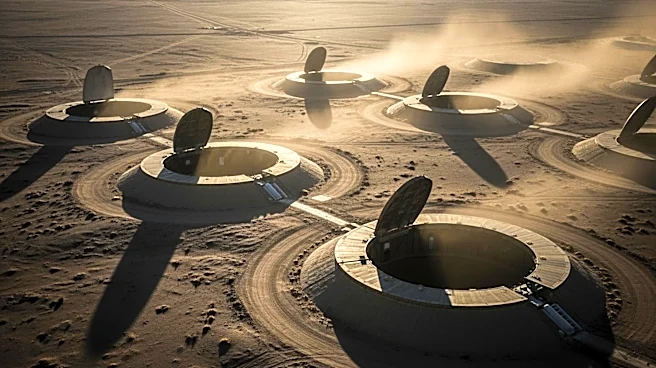
Iran has successfully reopened at least 50 out of 69 tunnel entrances at its underground missile bases, which were previously targeted by US and Israeli bombing campaigns. These efforts have been facilitated by the use of simple construction equipment
such as bulldozers and dump trucks, allowing Iran to regain access to its missile stockpiles. Despite the extensive bombing aimed at restricting Iran's missile capabilities, the depth and fortification of these underground facilities have limited the effectiveness of such military strategies. Satellite images reveal that Iran has not only cleared debris from tunnel entrances but also repaired roads leading to these sites, indicating a significant recovery of its missile infrastructure.
Why It's Important?
The reopening of Iran's missile sites underscores the limitations of the US and Israeli military strategies, which have focused on targeting tunnel entrances and infrastructure. This development highlights the resilience of Iran's missile capabilities and the challenges faced by military forces in achieving long-term strategic objectives. The ability of Iran to quickly repair and reopen these sites suggests that its missile threat remains significant, posing ongoing security concerns for the US and its allies in the region. The situation also raises questions about the effectiveness of current military tactics and the need for a comprehensive strategy that addresses the underlying issues of missile proliferation and regional security dynamics.
What's Next?
As Iran continues to restore its missile capabilities, the US and its allies may need to reassess their military and diplomatic strategies. The potential for renewed hostilities remains, especially if Iran resumes missile launches. Diplomatic efforts to address the broader security concerns in the region, including negotiations over missile capabilities and regional stability, may become increasingly important. The US may also need to consider alternative approaches to countering Iran's missile threat, potentially involving a combination of military, economic, and diplomatic measures.
Beyond the Headlines
The situation with Iran's missile sites highlights broader geopolitical tensions in the Middle East and the complexities of military engagement in the region. The resilience of Iran's missile infrastructure reflects its long-term strategic planning and investment in defense capabilities. This development may influence regional power dynamics and impact US foreign policy decisions. Additionally, the ongoing challenges in effectively neutralizing Iran's missile threat could lead to increased scrutiny of military spending and strategy, as well as calls for more innovative approaches to conflict resolution and security cooperation.