
What's Happening?
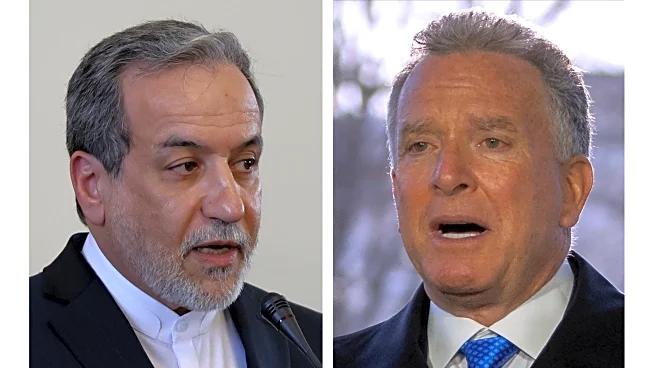
Iran's Foreign Minister, Abbas Araghchi, stated that while Iran does not seek war with Israel or the United States, it is prepared to defend itself if attacked. Speaking in Beirut, Araghchi emphasized Iran's willingness to engage in negotiations with the U.S.
over its nuclear program, provided the talks are based on mutual respect rather than unilateral demands from Washington. This statement comes amid fears of potential Israeli attacks on Iran, following a 12-day conflict in June where Israel targeted Iranian military officials and nuclear scientists, and the U.S. bombed Iranian nuclear sites. The U.S., under President Trump, has reimposed a 'maximum pressure' campaign on Iran, aiming to curb its nuclear ambitions. Araghchi's visit to Lebanon also included discussions on economic partnerships, highlighting Iran's interest in strengthening ties with Lebanon.
Why It's Important?
The ongoing tensions between Iran, the U.S., and Israel have significant implications for regional stability in the Middle East. The potential for military conflict could disrupt global oil markets, given Iran's strategic position in the region. The U.S.'s 'maximum pressure' campaign and military actions against Iran's nuclear facilities underscore the high stakes involved in preventing Iran from developing nuclear weapons. Additionally, Iran's readiness to negotiate underlines the complex diplomatic landscape, where mutual respect and interests are crucial for any potential resolution. The situation also affects U.S. foreign policy and its alliances, particularly with Israel, as both countries navigate their strategic interests in the region.
What's Next?
Future developments will likely hinge on diplomatic engagements between Iran and the U.S., as well as Israel's military posture. The possibility of renewed negotiations could lead to a de-escalation of tensions if both sides agree on a framework that respects mutual interests. However, any further military actions by Israel or the U.S. could escalate the situation, potentially drawing in other regional actors. The international community, including the United Nations, may play a role in facilitating dialogue to prevent conflict. Monitoring Iran's nuclear activities and ensuring compliance with international agreements will remain a priority for global powers.