



What's Happening?
An 18-year-old man was rescued after being trapped under several feet of sand for over an hour at Scusset Beach in Sandwich, Massachusetts, on Tuesday. The incident occurred when the man, identified as Zach, was building a sandcastle and a hole he had
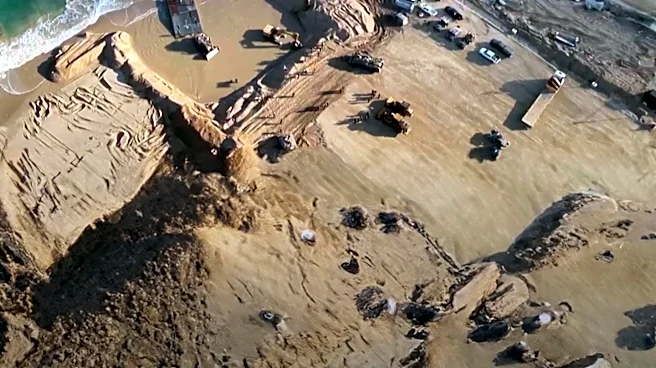
dug for a moat collapsed, burying him above the waist. According to Bourne police, he became stuck in the caved-in hole. Dotty Coleman, who called 911, stated that Zach was in a squatting position with his hands and legs buried, unable to move. Sandwich Fire Chief John Burke reported that first responders found him buried up to his mid-chest and sinking further. More than two dozen emergency personnel responded, digging for nearly an hour to free him. Witness Dan Salvatoriello described how rescue crews tied a rope around the man to pull him out. Zach was alert and conscious upon being freed and was transported by medical helicopter to Rhode Island Hospital. A second person was evaluated at the scene but declined medical transportation.
Why It's Important?
This incident highlights the inherent dangers associated with digging large holes in sand, particularly on beaches where sand can be unstable and prone to collapse. The rapid response and coordinated efforts of emergency services, including Bourne police, Sandwich Fire Chief John Burke, and other personnel, were crucial in preventing a potentially fatal outcome. The event serves as a critical reminder for beachgoers, especially those engaging in sand-digging activities, about the importance of safety precautions and awareness of environmental risks. The need for immediate intervention by first responders and good Samaritans underscores the community's role in emergency situations. The transportation of the individual to Rhode Island Hospital by medical helicopter indicates the severity of the entrapment and the potential for serious injury or suffocation, emphasizing the critical nature of such rescues.
What's Next?
Following the rescue, authorities will likely review the incident to assess any potential safety recommendations or warnings for beach visitors regarding sand digging. While no further information was immediately available, the event may prompt local officials to consider enhanced signage or public awareness campaigns about the dangers of digging deep holes on beaches. The 18-year-old's recovery will be monitored at Rhode Island Hospital. The hole where the incident occurred was reportedly boarded up, suggesting immediate measures were taken to prevent further accidents at that specific location. This event could also lead to discussions among emergency services about best practices for sand entrapment rescues, potentially refining their protocols for similar future incidents.
Beyond the Headlines
Beyond the immediate rescue, this event brings to light the often-underestimated hazards of seemingly innocuous recreational activities. The act of building sandcastles, a common and joyful pastime, can turn dangerous when large excavations are involved, as sand can act like quicksand when wet and unstable. This incident underscores the need for public education on beach safety, extending beyond water-related risks to include land-based activities. It also highlights the psychological impact on witnesses and first responders, who often face high-stress situations. The community's gratitude for the swift response, as expressed by Dotty Coleman, reflects the vital role of emergency services in maintaining public safety and the collective relief when a life-threatening situation is averted. The incident serves as a stark reminder that even familiar environments can present unexpected dangers.