




What's Happening?
Tasmania is pioneering a new model of sustainable transport with the launch of Australia's first electric hydrofoiling passenger network on Hobart's Derwent River. The initiative, led by Fly Derwent and New Zealand marine innovator Vessev, introduces
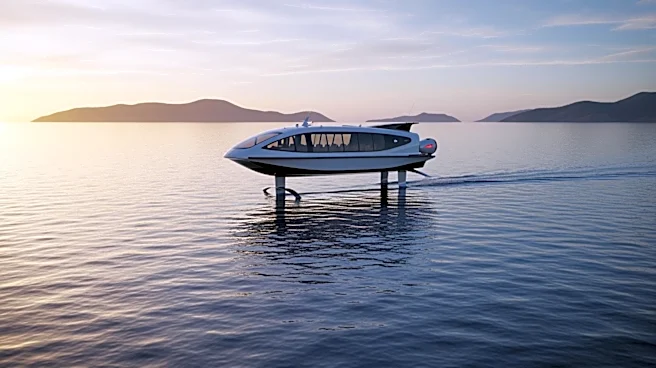
the VS-9, a 10-seat, fully electric hydrofoiling catamaran. This vessel lifts clear of the water on carbon fiber foils, cruising at 25 knots with zero emissions. The project aims to reduce environmental impact and operating costs, insulating Tasmania from reliance on imported diesel and fossil fuel volatility. The network will also include VS-12s, carrying 30 passengers each, marking the first global order of this vessel. The initiative is seen as a response to the global oil crisis, offering a sustainable alternative to conventional diesel-dependent ferry services.
Why It's Important?
The launch of Tasmania's electric hydrofoiling network represents a significant shift towards sustainable transport solutions, particularly in the face of rising fuel prices and global oil dependency. By utilizing renewable energy sources, Tasmania is setting a precedent for other regions to follow, potentially reducing reliance on fossil fuels and mitigating environmental impact. This initiative not only offers a cleaner mode of transport but also positions Tasmania as a leader in renewable energy utilization, leveraging its nearly 100% renewable electricity generation. The project could inspire similar developments worldwide, especially in cities with unused waterways, promoting a global shift towards sustainable water transport.
What's Next?
The first stage of Fly Derwent will serve commuters and premium tourism operators from Hobart's waterfront, with the VS-9 expected to arrive in early 2027. The project is exploring on-site battery storage and vehicle-to-grid integration to further enhance energy independence. As battery technology continues to improve, the vessels may see increased range and performance during their operational lives. This development could lead to expanded routes and increased frequency of service, potentially transforming water transport in Tasmania and beyond.
Beyond the Headlines
The initiative highlights the convergence of technological advancements in hydrofoiling, electric vehicles, and drone stabilization systems, creating a new class of transport vehicle. This project not only addresses environmental concerns but also offers a flexible commercial model, blending commuter and premium tourism use. The technology could unlock access to Tasmania's inland lakes, previously closed to motorized access due to environmental concerns, further promoting sustainable tourism.