
What's Happening?
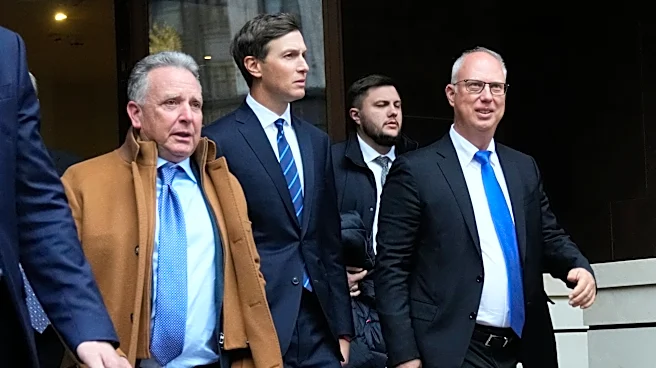
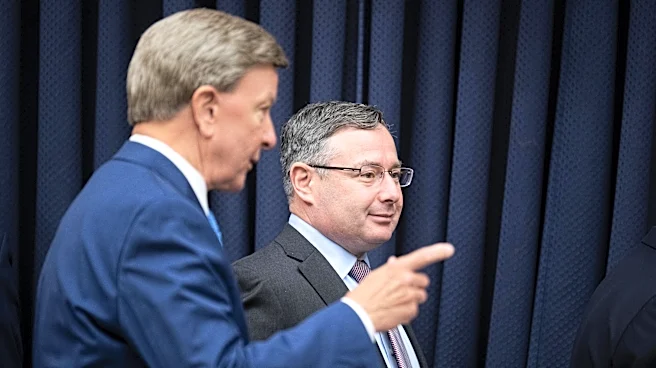
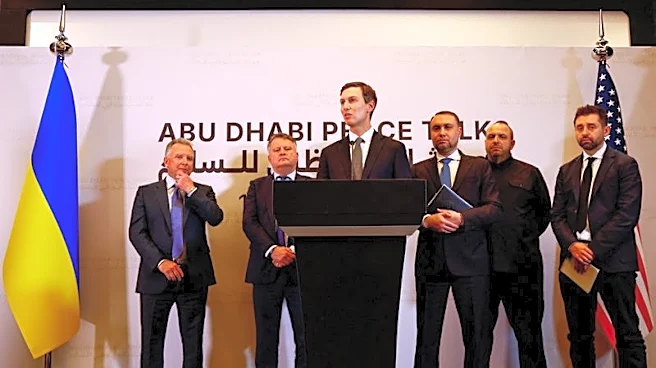
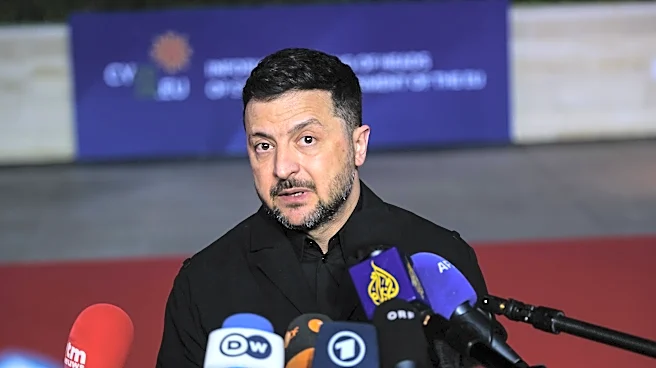
Ukrainian President Volodymyr Zelensky has announced a significant agreement with Russia for a prisoner of war exchange, which he described as a "real result." The announcement followed his meeting with U.S.
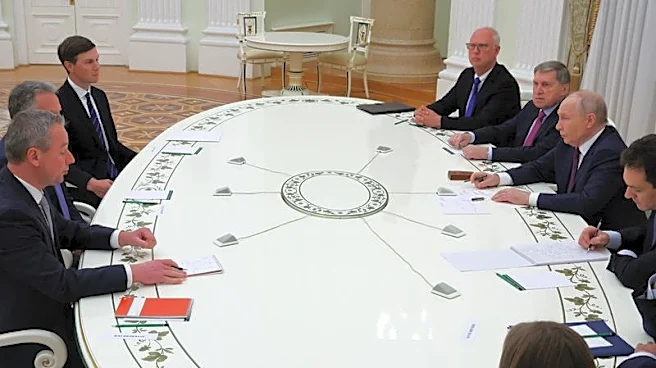
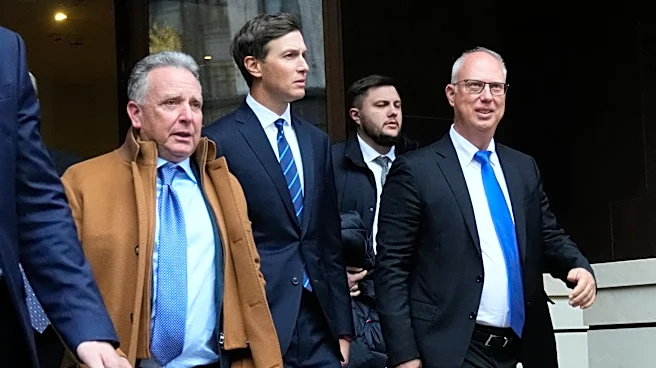
envoys Steve Witkoff and Jared Kushner near Dublin. President Zelensky stated that this would be "the biggest exchange of war prisoners" to date, emphasizing that "Our soldiers will come home." He expressed profound gratitude to all negotiators involved, highlighting the importance and success of this development for the families of the prisoners and for the nation as a whole. This agreement signifies a rare instance of direct cooperation between Ukraine and Russia on humanitarian grounds amidst the ongoing conflict, offering a glimmer of hope for the return of numerous individuals held captive by both sides.
Why It's Important?
This prisoner exchange deal holds immense significance on multiple levels. Primarily, it represents a crucial humanitarian breakthrough, offering relief and reunion for countless families who have endured prolonged uncertainty and anguish over their loved ones' fates. For Ukraine, the return of its soldiers is a powerful morale booster, reinforcing national unity and demonstrating the government's commitment to its citizens. Such exchanges can also serve as a rare, albeit limited, channel for communication and de-escalation between warring parties, potentially paving the way for future humanitarian initiatives. The involvement of U.S. envoys in the discussions underscores the continued international diplomatic efforts to address the conflict's human toll and suggests a potential role for third-party mediation in facilitating such agreements. While not a step towards peace, it is a tangible outcome that directly impacts human lives and can alleviate some of the immense suffering caused by the war.
What's Next?
The immediate next step will be the logistical execution of the prisoner exchange, which typically involves complex coordination between the warring parties and potentially international organizations. Details regarding the number of prisoners to be exchanged, the specific locations, and the timeline will likely be finalized and announced. Following the exchange, there will be a focus on the reintegration and rehabilitation of the returning soldiers, who may require significant medical and psychological support. This successful exchange could set a precedent for future similar agreements, potentially leading to more frequent or larger prisoner swaps. It may also encourage further diplomatic efforts to address other humanitarian issues arising from the conflict, such as the return of displaced persons or the establishment of humanitarian corridors. However, it is unlikely to immediately alter the broader military or political dynamics of the conflict.
Beyond the Headlines
Beyond the immediate humanitarian relief, this prisoner exchange carries deeper implications for the narrative and perception of the conflict. For Ukraine, it reinforces the image of a government actively fighting for its people, even those in captivity, bolstering domestic support and international sympathy. For Russia, participating in such an exchange, especially one facilitated by U.S. envoys, could be seen as a subtle attempt to project a more humanitarian image on the international stage, potentially aiming to soften criticism or create avenues for future diplomatic engagement. The involvement of U.S. envoys also highlights the persistent, albeit often behind-the-scenes, role of international diplomacy in managing the conflict's consequences. This event underscores the enduring human element of warfare, where despite grand geopolitical strategies, the fate of individual soldiers and their families remains a powerful and emotive force, capable of driving limited cooperation even between bitter adversaries. It also serves as a reminder of the psychological warfare inherent in conflict, where the return of prisoners can be a tool for both morale boosting and propaganda.