






What's Happening?
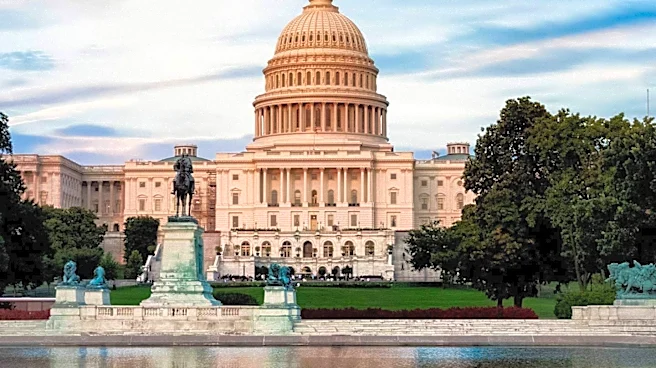
The United States House of Representatives recently passed the National Defense Authorization Act (NDAA), which includes $750 million in funding for Israel-related military programs for the fiscal year 2027. This funding is $65 million more than the previous
year and is part of ongoing U.S. military support for Israel, particularly during its conflict in Gaza. The NDAA, however, is not yet law and must pass the Senate before reaching the president's desk. The bill has sparked mixed reactions, with pro-Israel groups like AIPAC supporting the funding, while organizations such as the Council on American-Islamic Relations criticize it, arguing it could exacerbate the conflict in Gaza. The funding includes $500 million for missile defense systems like the Iron Dome, and $250 million for other military capabilities, including counter-unmanned systems and emerging defense technologies.
Why It's Important?
The passage of the NDAA highlights the significant role of U.S. military aid in shaping Israel's defense capabilities. This aid not only supports Israel's defense systems but also impacts U.S. defense contractors like Boeing and Lockheed Martin, which supply military equipment to Israel. The funding for missile defense systems like the Iron Dome underscores the strategic importance of these technologies in protecting against regional threats. Additionally, the involvement of U.S. companies in Israel's military supply chain reflects broader economic ties and the influence of defense spending on the U.S. economy. The debate over this aid also reflects broader geopolitical tensions and differing perspectives on U.S. foreign policy in the Middle East.
What's Next?
The NDAA's future remains uncertain as it moves to the Senate, where it faces potential opposition. If passed, the funding will continue to support Israel's military capabilities, potentially influencing the dynamics of the ongoing conflict in Gaza. The outcome of the Senate vote will be closely watched by stakeholders, including defense contractors and advocacy groups. Additionally, the broader implications of U.S. military aid on regional stability and U.S.-Israel relations will continue to be a topic of discussion among policymakers and analysts.
Beyond the Headlines
The NDAA's passage and the associated military aid to Israel raise ethical and legal questions about the U.S.'s role in international conflicts. The funding for advanced technologies, including artificial intelligence-driven systems, highlights the evolving nature of warfare and the potential for new ethical dilemmas. The involvement of private companies in military supply chains also raises questions about corporate responsibility and transparency in defense-related activities. As the U.S. continues to navigate its foreign policy in the Middle East, these issues will likely remain at the forefront of public and political discourse.