





What's Happening?
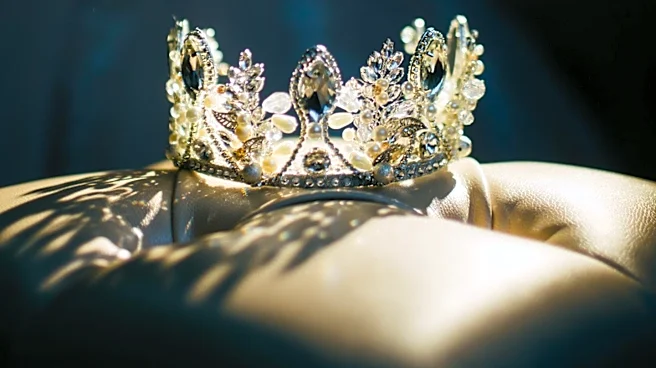
Duchess Sophie, the Duchess of Edinburgh, wore a distinctive tiara for her 1999 wedding to Prince Edward, the youngest child of Queen Elizabeth II and Prince Philip. This tiara, which has since been named the Anthemion Tiara due to its diamond motifs,
was a significant part of her bridal ensemble. Buckingham Palace stated at the time that the diamond elements of the tiara were sourced from Queen Elizabeth II's personal collection, but has never disclosed its precise origins. This lack of information has led to ongoing speculation among royal observers. The tiara's design, particularly the anthemion motifs, is seen by some as a subtle tribute to Prince Philip, who was born a Prince of Greece and Denmark. The Duchess has continued to wear the tiara on various royal occasions, including other royal weddings, and it underwent a slight remodelling in 2019 to bring the anthemions closer together. Her wedding dress was a full-length coat dress adorned with over 325,000 pearls and crystal beads, and she also wore a necklace designed for her by Prince Edward, inspired by the medieval architecture of St. George's Chapel.
Why It's Important?
The enduring mystery surrounding the Anthemion Tiara highlights the blend of tradition and personal choice within the British royal family's public image. While royal jewelry often carries historical significance and is meticulously documented, the undisclosed origins of Sophie's tiara add an element of intrigue that captivates public interest. This fascination contributes to the broader narrative of the monarchy, where every detail, from attire to accessories, is scrutinized for meaning and connection to royal heritage. The tiara's perceived nod to Prince Philip, a figure deeply connected to the royal family's international ties, further underscores how personal and symbolic elements are woven into royal appearances. For the public, such mysteries contribute to the mystique of the monarchy, fostering continued engagement and discussion about its history and traditions. The tiara's continued use by the Duchess of Edinburgh also signifies its integration into the royal collection and its role in her public representation.
What's Next?
It is unlikely that Buckingham Palace will release further details regarding the tiara's origins, maintaining its status as a royal mystery. Duchess Sophie will likely continue to wear the Anthemion Tiara at future royal engagements, particularly those of significant ceremonial importance, further cementing its place within the royal jewelry collection and her public persona. The tiara's remodelling in 2019 suggests a commitment to its continued use and adaptation to contemporary styles, ensuring its relevance for future generations. Royal commentators and enthusiasts will probably continue to speculate about its history, adding to the ongoing narrative and allure surrounding royal artifacts. The tiara's association with the Duchess of Edinburgh will grow stronger with each public appearance, making it an identifiable part of her royal image.
Beyond the Headlines
The mystery of the Anthemion Tiara transcends mere jewelry, touching upon the broader cultural and historical significance of royal artifacts. It exemplifies how objects can become imbued with narrative and symbolism, even in the absence of complete historical documentation. The public's sustained interest in such details reflects a deeper engagement with the monarchy as a cultural institution, where tradition, lineage, and personal stories intertwine. The tiara's Greek-inspired design, if indeed a tribute to Prince Philip, subtly highlights the international connections and diverse heritage within the British royal family. This blend of known history and intriguing unknowns allows for ongoing interpretation and discussion, contributing to the rich tapestry of royal lore and maintaining a sense of wonder and connection for those who follow the monarchy.