






What's Happening?
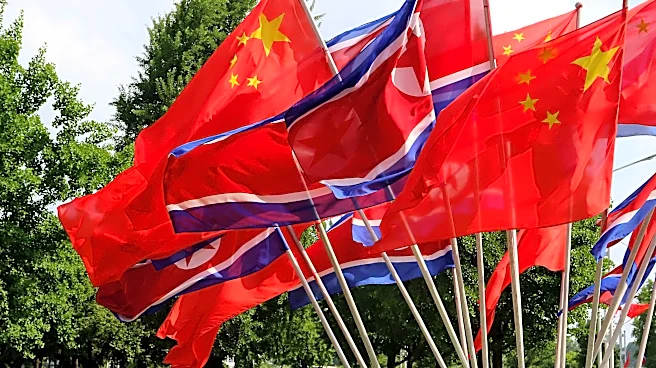
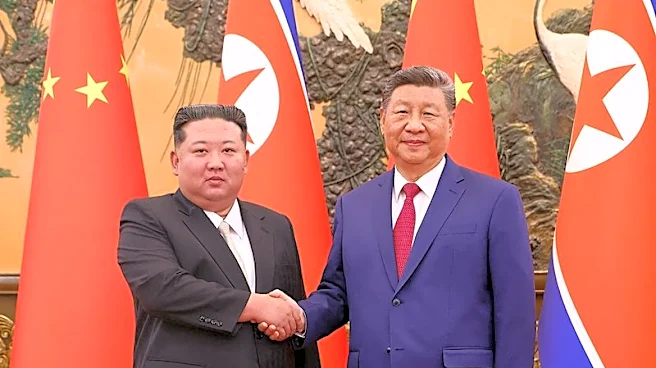
Chinese President Xi Jinping and North Korean leader Kim Jong Un have agreed to enhance cooperation in politics, economy, and culture during a summit in Pyongyang. This meeting marks Xi's first visit to North Korea in seven years and aims to open a new
chapter in bilateral relations. Both leaders committed to closer strategic communication through high-level official visits. Kim expressed support for the 'One China principle,' aligning with Beijing's stance on Taiwan. The summit coincides with the 65th anniversary of the China-North Korea friendship treaty, highlighting the historical ties between the two nations. Despite the positive rhetoric, analysts note differing priorities, with China focusing on practical state-to-state ties and North Korea emphasizing regime dignity and solidarity.
Why It's Important?
The strengthening of China-North Korea relations has significant implications for regional stability and international diplomacy. As North Korea's primary ally, China's support is crucial for Pyongyang, especially amid ongoing tensions with the United States. The summit underscores China's strategic interest in maintaining influence over North Korea, which could impact negotiations related to North Korea's nuclear program. For the U.S., this development may complicate diplomatic efforts to engage North Korea, as China could act as a buffer against international pressure. The renewed ties also reflect China's broader geopolitical strategy to counterbalance U.S. influence in the region.
What's Next?
Future developments may include increased economic and cultural exchanges between China and North Korea, as well as potential high-level visits to further solidify ties. The summit's outcomes could influence North Korea's approach to international negotiations, particularly regarding its nuclear program. Observers will be watching for any shifts in North Korea's diplomatic stance, especially in relation to the U.S. and South Korea. Additionally, China's role as a mediator in regional conflicts may be reinforced, potentially affecting the dynamics of U.S.-China relations.