







What's Happening?
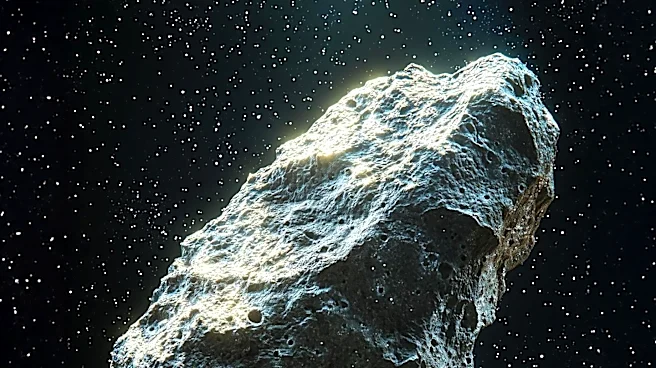
On July 16, 2024, a meteorite crashed through the roof of a home in Hillsborough, New Jersey. This meteorite, named Hillsborough, is a CM1/2 carbonaceous chondrite, which is a type of space rock known for containing organic molecules. Recent analysis
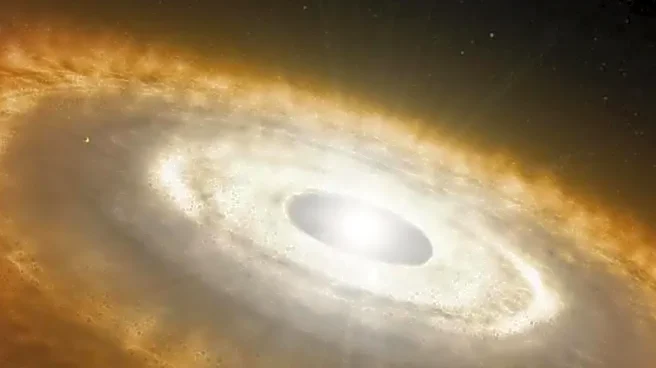
by an international research team has revealed that the meteorite contains a diverse range of life's building blocks, including carbon-bearing compounds, amino acids, and other prebiotic molecules. Additionally, the meteorite shows evidence of concentrated salty fluids, or brines, on its parent asteroid, which is a unique find. The study, led by Peter Jenniskens from NASA and the SETI Institute, was published in Science Advances. The meteorite's origin is traced back to the inner asteroid belt, and it provides insights into how organic matter and water were distributed in the early solar system.
Why It's Important?
The discovery of organic molecules and briny water in the Hillsborough meteorite is significant as it supports the hypothesis that asteroids and comets may have delivered the building blocks of life to early Earth. This finding adds to the growing body of evidence that carbonaceous chondrites played a crucial role in the development of life on our planet. The presence of brines suggests that the parent asteroid had conditions that could facilitate complex chemical reactions, potentially leading to the formation of life. This research enhances our understanding of the origins of life and the distribution of organic materials in the solar system, which could have implications for the search for life beyond Earth.
What's Next?
Researchers plan to compare the salts found in the Hillsborough meteorite with those from other asteroids like Ryugu and Bennu, which have been explored by recent space missions. This comparison could provide further insights into the chemical processes that occurred on these asteroids. Additionally, the study of the Hillsborough meteorite may lead to more targeted searches for similar meteorites, which could yield further discoveries about the early solar system and the origins of life. The findings may also influence future space missions aimed at collecting samples from asteroids and comets.