




What's Happening?
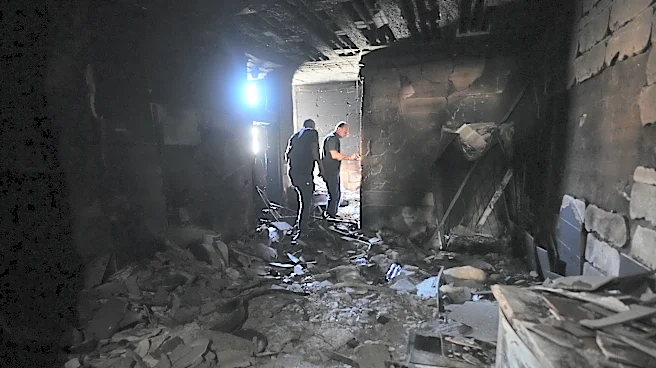
The United States has withdrawn most of its forces from Nigeria following a successful joint operation with Nigerian forces against Islamic State (ISIS) terrorists. The operation, conducted in May, resulted in the death of Abu-Bilal al-Minuki, ISIS's
second-in-command globally. This move follows a previous U.S. strike ordered by President Trump on Christmas Day. The U.S. Africa Command (AFRICOM) is now providing intelligence support at Nigeria's request, as part of a continued partnership. AFRICOM Commander General Dagvin Anderson highlighted the operation as a model for future security cooperation in Africa.
Why It's Important?
The withdrawal of U.S. forces marks a shift in the U.S. military's role in Nigeria, emphasizing intelligence support over direct military involvement. This approach allows African nations to lead security operations, potentially strengthening regional security capabilities. The operation's success in degrading ISIS leadership could have broader implications for counterterrorism efforts in West Africa and beyond, disrupting the terrorist group's international network and communications.
What's Next?
The U.S. and Nigeria are expected to continue their partnership, focusing on intelligence sharing and capacity building. The Nigerian military's ongoing efforts against ISIS, supported by U.S. intelligence, may lead to further degradation of the terrorist group's influence in the region. The success of this model could influence U.S. military strategies in other parts of Africa, promoting local leadership in security operations.