





What's Happening?
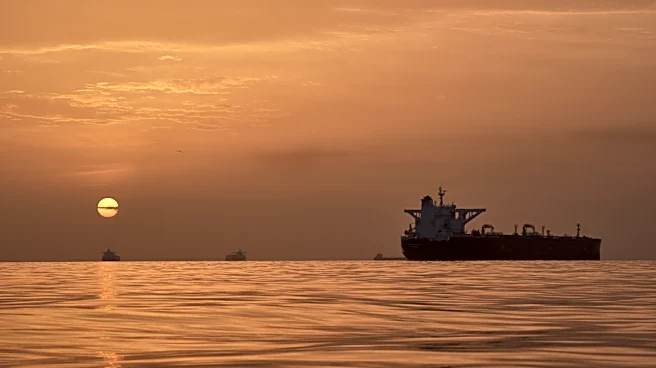
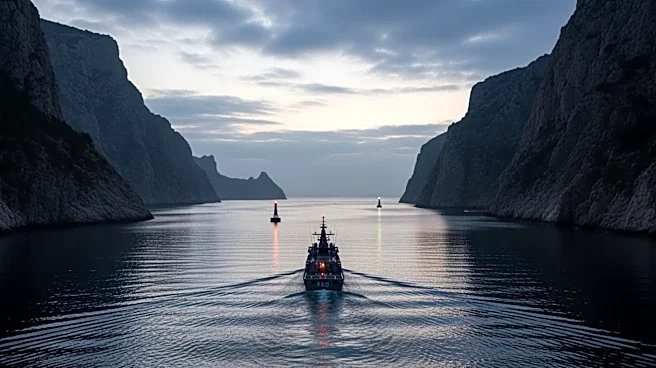
Iran has issued a warning to the United States regarding its naval blockade of Iranian ports, which Tehran describes as 'blockade and piracy.' The warning was conveyed through Pakistani officials as part of Islamabad's mediation efforts between Washington
and Tehran. The U.S. has demanded that Iran cease uranium enrichment and ensure free oil transit through the Strait of Hormuz. The blockade, which requires U.S. Navy approval for vessels traveling to or from Iranian ports, has heightened tensions in the region. Iran's military leadership has threatened a response if the blockade continues.
Why It's Important?
The situation in the Strait of Hormuz is critical due to its status as a major global energy chokepoint. The U.S. blockade and Iran's response could have significant implications for international oil markets and regional stability. The confrontation highlights ongoing geopolitical tensions between the U.S. and Iran, with potential impacts on global energy security and diplomatic relations. The involvement of Pakistan as a mediator underscores the complexity of regional alliances and the potential for broader diplomatic efforts to resolve the standoff.
What's Next?
The continuation of the U.S. blockade and Iran's potential response could escalate tensions further, impacting global oil prices and regional security. Diplomatic efforts, including those by Pakistan, may seek to de-escalate the situation and find a resolution. The international community will likely monitor developments closely, with potential implications for U.S.-Iran relations and broader Middle Eastern geopolitics. Future negotiations may focus on addressing the underlying issues of nuclear enrichment and maritime security.