
What's Happening?
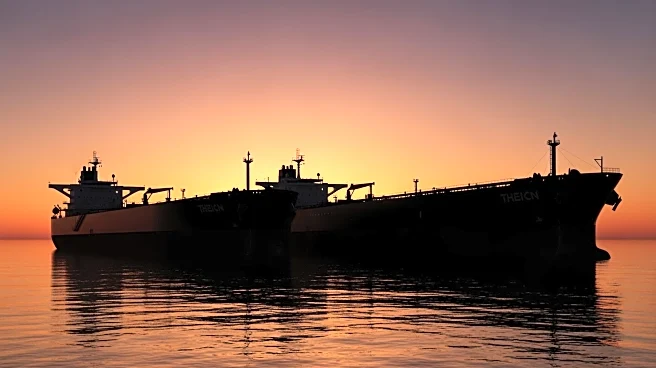
Venezuela has authorized two very large crude carriers (VLCCs) to depart for China, marking only the second and third such departures since the U.S. seized a Venezuelan oil-carrying ship last week. These
tankers, each carrying approximately 1.9 million barrels of Venezuelan Merey heavy crude, are not on the U.S. sanctions list. The U.S. has stated it will not allow sanctioned vessels to leave Venezuelan waters, as part of a blockade announced by President Trump. The tankers plan to navigate with their tracking transponders off, a common practice among the 'shadow fleet' of ships that often transport oil from sanctioned countries like Iran, Russia, and Venezuela. This fleet is largely unregulated by Western insurers and maritime service providers, making it vulnerable to potential U.S. punitive measures.
Why It's Important?
The authorization of these tankers highlights the ongoing geopolitical tensions between the U.S. and Venezuela, particularly in the context of oil exports. The U.S. blockade aims to pressure Venezuela by restricting its oil trade, a critical component of its economy. This move could further strain U.S.-Venezuela relations and impact global oil markets, especially if more tankers are sanctioned or seized. The situation also underscores the challenges faced by countries like Venezuela in circumventing U.S. sanctions, which can significantly disrupt their economic activities and international trade partnerships.
What's Next?
The future of Venezuela's oil exports remains uncertain as the U.S. continues to enforce its blockade. Venezuela may seek alternative routes or partners to maintain its oil trade, potentially increasing its reliance on countries like China. The international community, particularly countries involved in Venezuelan oil trade, will likely monitor the situation closely. Any escalation in U.S. sanctions or enforcement actions could lead to further diplomatic tensions and impact global oil supply chains.