


What's Happening?
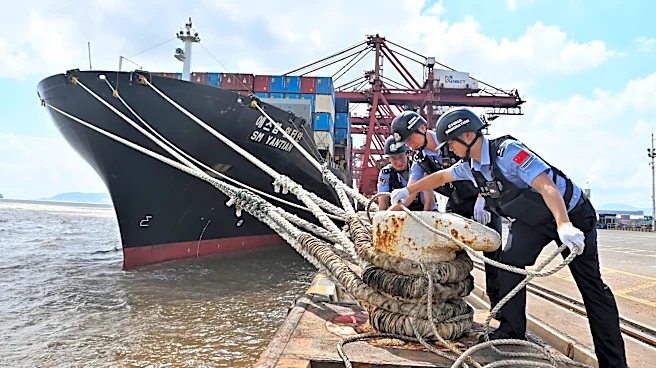
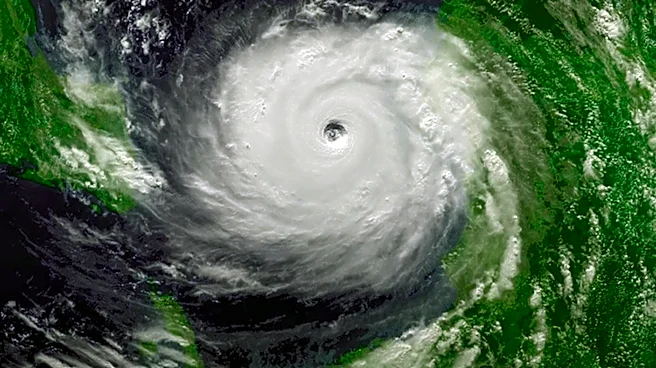
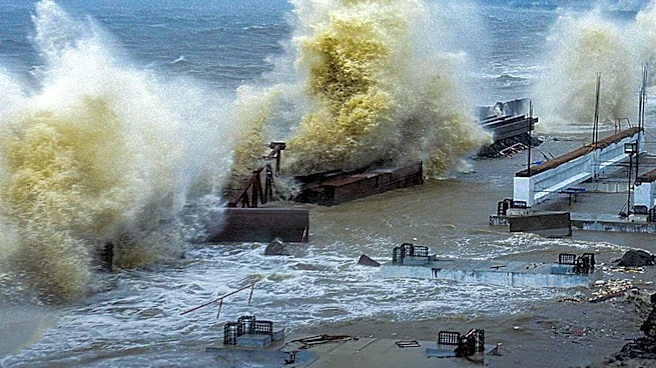
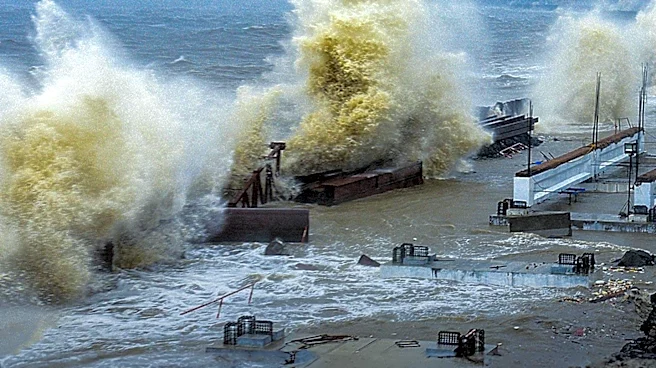
Typhoon Dolphin made landfall in Yuhuan, Zhejiang province, China, on Sunday evening, bringing with it strong winds of up to 151 kilometers per hour and heavy rainfall. The storm prompted the National Meteorological Center to issue a red alert, the highest
level in China's typhoon warning system. As a result, over a million people were evacuated from their homes, with significant numbers relocated in cities like Wenzhou and Shanghai. The storm has caused widespread disruption, including the cancellation of nearly 1,000 flights at Shanghai's airports, which reduced their capacity by almost 40%. Public transport services, including local trains, were also suspended in Shanghai due to flooding. The typhoon has since weakened into a tropical storm as it moved inland, affecting provinces such as Anhui, Jiangsu, and Shandong.
Why It's Important?
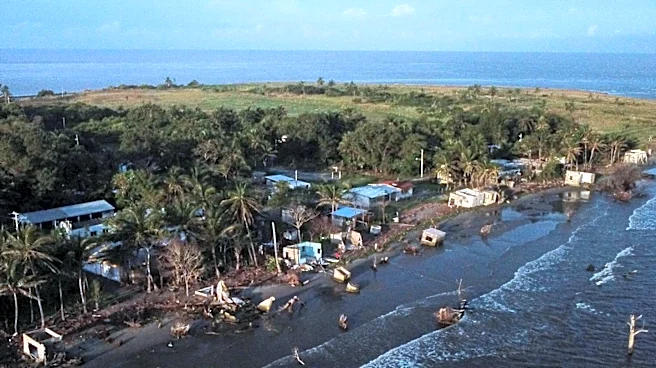
The impact of Typhoon Dolphin is significant as it highlights the vulnerability of densely populated urban areas to severe weather events. The mass evacuations and flight cancellations underscore the logistical challenges faced by authorities in managing such natural disasters. The economic implications are also considerable, with disruptions to transportation and potential damage to infrastructure and property. The storm's progression inland poses further risks of flooding and landslides, particularly in areas like Beijing, which is preparing for heavy rainfall. This event emphasizes the need for robust disaster preparedness and response strategies in the face of increasingly frequent and severe weather phenomena.
What's Next?
As Typhoon Dolphin continues to move inland, authorities are on high alert for potential flooding and landslides, particularly in central provinces like Hubei and Henan. In Beijing, preparations are underway to activate flood control measures, with significant rainfall expected in the coming days. The focus will be on ensuring the safety of residents and minimizing further disruptions. Efforts to restore transportation services are ongoing, with some cities already resuming operations. The situation remains dynamic, and continued monitoring and response will be crucial in mitigating the storm's impact.