




What's Happening?
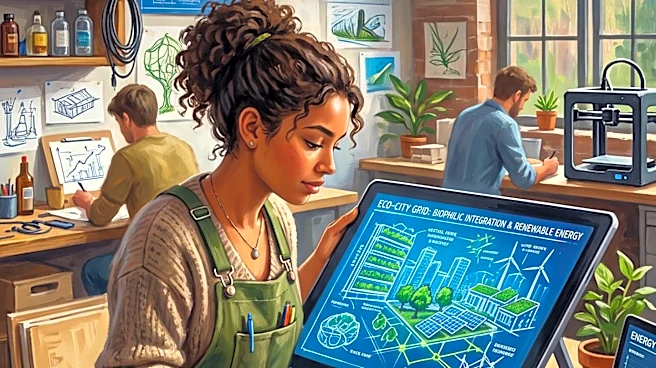
A team of Penn State researchers, led by graduate student Ava Spangler and Assistant Professor Antonia Hadjimichael, has developed a co-designed urban flood modeling framework to address pluvial flooding in Baltimore. This type of flooding, caused by rainfall
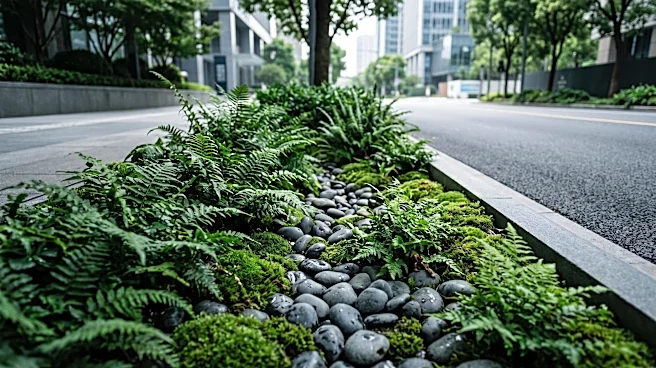
rather than river overflow or high tides, is a significant concern for Baltimore residents and has increased in frequency and intensity since 1748. Traditional flood prevention methods, often relying on impervious surfaces, are frequently ineffective in urban settings because they hinder rainwater infiltration. The researchers collaborated with Baltimore community members over three years through workshops to understand their concerns and identify feasible mitigation techniques. The study found that collaboratively designed strategies, such as planting rain gardens (green stormwater infrastructure) and cleaning storm inlets, could reduce flood depths by up to 55% in some locations. Cleaning storm inlets was identified as the most impactful single mitigation strategy. The team published their findings in 'Sustainable Cities and Society'.
Why It's Important?
This research is important because it offers a novel, community-centric approach to tackling urban flooding, a problem causing significant social, environmental, and economic losses annually in U.S. cities. By integrating local knowledge and priorities directly into the flood model development and adaptation design, the project enhances the relevance and feasibility of mitigation strategies. This collaborative model can lead to more effective and sustainable solutions compared to top-down approaches that may overlook specific community needs or terrain complexities. The findings, particularly the potential to reduce flood depths by up to 55%, demonstrate a tangible benefit for residents and businesses in flood-prone urban areas. Furthermore, the emphasis on pluvial flooding, an often-understudied flood type, addresses a critical gap in urban climate adaptation research and practice. The project also highlights the value of interdisciplinary teams, combining hydrology, ecology, landscape architecture, city planning, and community input, to address complex climate hazards.
What's Next?
The Penn State researchers and their community collaborators plan to continue discussing the findings and working towards implementable solutions in Baltimore. Future steps include evaluating how these findings compare to other climate adaptation studies in the city as part of the Baltimore Social Environmental Collaborative. The team also intends to investigate the interplay of solutions and co-benefits, considering how adaptations for flooding might also address other climate hazards like air quality and heat. For instance, while rain gardens may not be as effective as inlet cleaning for flood reduction, they could offer benefits for urban heat mitigation. The researchers hope that more urban scientists across the country will adopt this strategy of community engagement for future projects, creating relevant and usable insights for cities preparing for climate impacts. This approach could lead to broader adoption of co-designed flood adaptation models in other U.S. urban centers facing similar challenges.
Beyond the Headlines
This study delves into the deeper implications of climate change adaptation by emphasizing the ethical and practical necessity of community engagement. The traditional scientific model often operates in isolation, but this project demonstrates that integrating local knowledge and lived experiences can significantly strengthen scientific models and lead to more effective, equitable, and accepted solutions. The challenge of validating flood models due to the rapid nature of pluvial flooding and the lack of sensor data also highlights a broader issue in environmental monitoring and data collection. The use of social media posts and news images for validation, as mentioned by the researchers, points to innovative, crowdsourced data collection methods that could become increasingly vital. This collaborative framework could foster greater trust between scientific institutions and local communities, potentially leading to more resilient urban environments and a more inclusive approach to climate science and policy across the U.S.