






What's Happening?
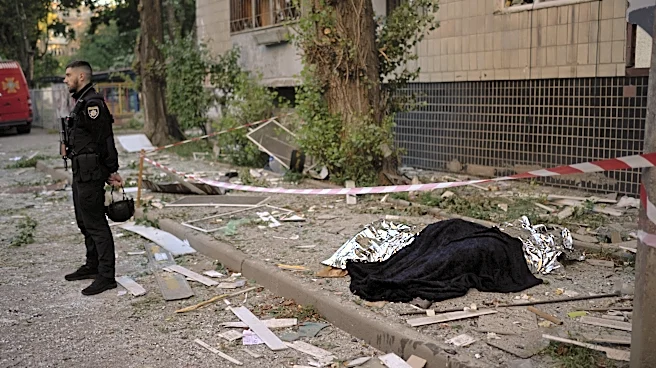
Anastasiia Berezovska, a Ukrainian woman identified as the suspect in a bombing that gravely injured millionaire Vadym Yermolaiev in Monaco, was found dead in a shallow grave near Kyiv, Ukraine. The bombing occurred on June 29, when a device exploded
on the doorstep of Yermolaiev’s luxury apartment. Berezovska, a 39-year-old single mother with no prior criminal record or apparent motive, was captured on CCTV conducting reconnaissance before the attack, sometimes disguised and other times revealing her face and a prominent tattoo, which aided in her identification. After the bombing, she fled across multiple borders, traveling through France, Italy, and Germany before taking a bus back to Ukraine via Poland, crossing the border before an international arrest warrant was issued. Ukrainian prosecutors believe she was a 'foot soldier' motivated by money, though the ultimate mastermind remains unknown. Two alleged accomplices, Vladyslav Reut and Vitaliy Zhykovych, have been implicated in her death, with Reut being a serving officer in the Ukrainian Defense Intelligence Service (GUR) at the time.
Why It's Important?
This case highlights the complex and often murky world of international crime, involving individuals with potential ties to intelligence services and significant financial stakes. The involvement of a serving Ukrainian intelligence officer, Vladyslav Reut, in Berezovska's murder, even if allegedly without official knowledge, raises serious questions about accountability and oversight within such organizations. The millionaire victim, Vadym Yermolaiev, had previously been sanctioned by Kyiv for business dealings in Russian-occupied Crimea, adding another layer of geopolitical intrigue to the incident. The case also underscores the vulnerability of individuals caught in such schemes, as Berezovska, despite being the alleged bomber, is believed to have been killed to prevent her from testifying against others. The differing accounts from the alleged accomplices regarding Berezovska's death further complicate the investigation, suggesting a deeper conspiracy beyond a simple act of violence.
What's Next?
The investigation into the Monaco bombing and Berezovska's subsequent murder is ongoing, with Ukrainian authorities continuing to pursue the case. The alleged accomplices, Vladyslav Reut and Vitaliy Zhykovych, are facing legal proceedings, and their testimonies may shed more light on the masterminds behind the attack. The Ukrainian Defense Intelligence Service (GUR) has denied official involvement in Reut's actions and has stated its commitment to the investigation, suggesting potential internal inquiries or disciplinary actions. The case may also prompt further scrutiny into the activities of individuals with connections to intelligence agencies and their potential involvement in illicit operations. The victim, Vadym Yermolaiev, is seeking answers regarding who ordered the attack, indicating a continued push for justice and clarity in this complex international incident.
Beyond the Headlines
The Monaco bombing and the subsequent murder of the alleged perpetrator expose a darker side of international affairs, where individuals can be used as pawns in larger, often financially or politically motivated schemes. The narrative of Berezovska as a 'foolish, naive operative' who was 'told, in some way, that she was doing something important' suggests a pattern of exploitation, where vulnerable individuals are drawn into dangerous situations. The alleged involvement of individuals with ties to intelligence services, even if unofficial, blurs the lines between state-sponsored activities and criminal enterprises, raising ethical concerns about the potential misuse of such expertise. The case also highlights the challenges of international cooperation in prosecuting crimes that span multiple jurisdictions and involve complex networks of individuals and motives. The lack of a clear motive for the bombing, beyond financial gain for the 'foot soldier,' points to a deeper, unresolved mystery that could have significant implications for understanding the intersection of crime, intelligence, and geopolitics.