







What's Happening?
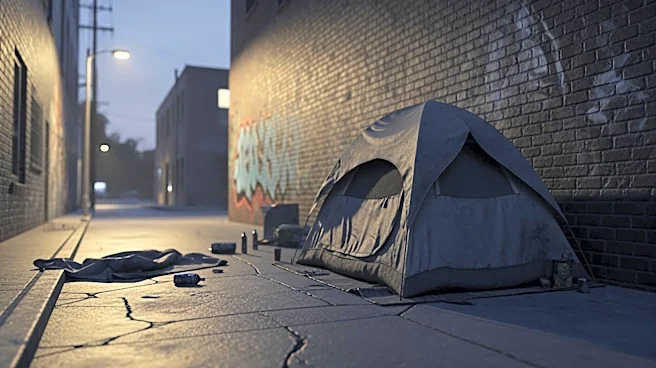
In Hollywood, a recent initiative by the nonprofit Hollywood 4WRD has highlighted a growing issue of 'rough sleepers'—individuals without tents or vehicles for shelter—on the streets. This development follows the city's efforts to remove prominent encampments,
which has inadvertently increased the number of people sleeping without any form of shelter. A novel homeless count conducted by Hollywood 4WRD involved about 60 volunteers who spread out across Hollywood to tally tents, makeshift shelters, and visibly homeless individuals. The count revealed a significant shift in the homeless population's living conditions, with a notable increase in those sleeping rough. The Rand Corporation's LA LEADS project, which has been surveying homelessness in Hollywood, Venice, and Skid Row, found that 52% of the homeless in Hollywood are now rough sleepers, a shift that complicates efforts to address unsheltered homelessness.
Why It's Important?
The increase in rough sleepers poses significant challenges for homeless policy and service providers in Hollywood. As the number of people living without tents or vehicles rises, traditional encampment resolution programs become less effective. These programs, such as Mayor Karen Bass' Inside Safe initiative, are designed to offer shelter to tent dwellers, but with fewer tents, the focus must shift. The dispersed nature of rough sleepers makes it harder for caseworkers to locate and assist them, reducing the efficiency of outreach teams. This shift necessitates a reevaluation of strategies to address homelessness, emphasizing the need for more adaptable and comprehensive approaches to support those without shelter.
What's Next?
Hollywood 4WRD plans to use the data from their count to inform and adjust outreach and engagement strategies among the approximately 50 homeless services agencies they coordinate. The organization aims to create its own data to better understand and address the needs of the homeless population in Hollywood. Final results from the count are expected to be announced soon, which will provide further insights into the current state of homelessness in the area. This data will be crucial for developing targeted interventions and ensuring that resources are allocated effectively to support those most in need.