



What's Happening?
The Trump administration has dissolved the United States Agency for International Development (USAID), which was once the world's largest humanitarian donor. This move has significantly altered the landscape of U.S. foreign aid. Established in the early
1960s by President John F. Kennedy and Congress, USAID was seen as a crucial tool for soft power diplomacy and humanitarian assistance, with supporters highlighting its role in preventing millions of deaths globally. Critics, including President Trump, argued the agency was inefficient and wasteful. The U.S. State Department has stated that the administration's new approach focuses on efficiency, effectiveness, and partnership, asserting that the U.S. continues to spend more on health and humanitarian assistance than any other country. The new strategy prioritizes initiatives that align with U.S. interests, often bypassing non-governmental organizations (NGOs) in favor of bilateral agreements with foreign governments. These agreements may involve concessions, such as access to health data, which the U.S. claims enhances efficiency in detecting disease outbreaks.
Why It's Important?
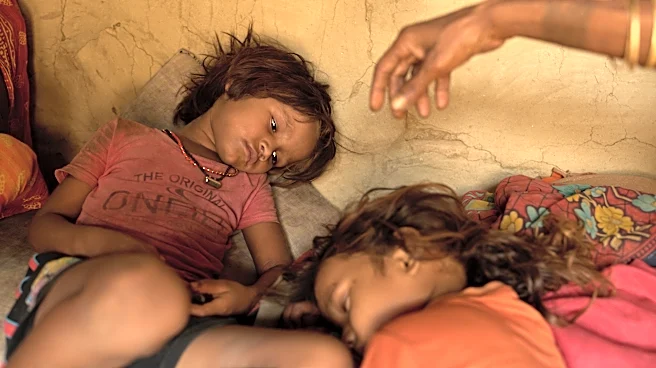
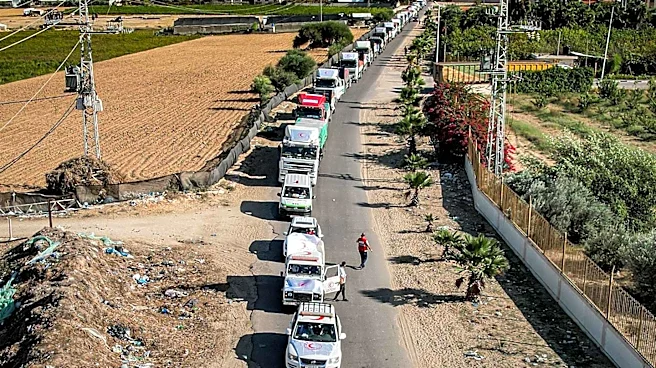
The dissolution of USAID and the subsequent shift in U.S. foreign aid strategy carry significant implications for global humanitarian efforts and U.S. foreign policy. Historically, USAID's programs were credited with fostering global goodwill towards the U.S., preventing disease spread, and promoting stability in foreign nations, all of which indirectly benefited U.S. security. The new approach, which emphasizes direct bilateral agreements and U.S. national interests, could lead to a reduction in the reach and scope of humanitarian aid, particularly in areas where U.S. strategic interests are less direct. The Associated Press has documented severe consequences of foreign aid cuts, including widespread hunger, medicine shortages, and increases in child marriage, kidnapping, and trafficking. While the U.S. State Department defends the new strategy as more efficient, some countries have expressed concerns, particularly regarding privacy issues related to sharing citizens' medical records in exchange for aid. This shift could also alter the dynamics of international cooperation, potentially placing a greater burden on other nations to contribute to global humanitarian efforts.
What's Next?
The long-term impacts of the Trump administration's foreign aid strategy are still unfolding, with experts suggesting that the full extent of the damage from funding cuts may not be measurable for years. The shift towards bilateral agreements means that future aid disbursements will likely be contingent on specific concessions from recipient countries, potentially leading to ongoing negotiations and varying levels of cooperation. The Gates Foundation has predicted an increase in child deaths by 2025, marking the first such rise this century, which could be a direct consequence of reduced foreign aid. International organizations and other donor countries may need to re-evaluate their roles and contributions to fill the gaps left by the U.S. withdrawal from traditional humanitarian aid structures. The U.S. State Department's call for other nations to 'contribute more and share the burden' indicates a potential push for a more distributed global responsibility in humanitarian assistance.
Beyond the Headlines
The dissolution of USAID and the reorientation of U.S. foreign aid raise deeper questions about the ethical responsibilities of global powers and the nature of international diplomacy. The historical model of USAID, rooted in a moral obligation to assist the world's most vulnerable, also served as a powerful tool of 'soft power,' cultivating alliances and influence through humanitarian goodwill. The new strategy, explicitly linking aid to U.S. national interests, could be perceived as a more transactional approach, potentially eroding trust and goodwill in the long run. The concerns raised by some countries regarding data privacy in exchange for health aid highlight the ethical dilemmas inherent in such bilateral agreements. This shift could also lead to a redefinition of what constitutes 'humanitarian aid' on the global stage, moving away from broad-based development and emergency relief towards more targeted, interest-driven interventions. The long-term implications for global health security, particularly in detecting and preventing infectious disease outbreaks, remain a critical concern, as the effectiveness of bilateral data-sharing agreements compared to comprehensive, NGO-led programs is yet to be fully assessed.